Colorado’s Wild Horses: Sand Wash Basin, Piceance & More
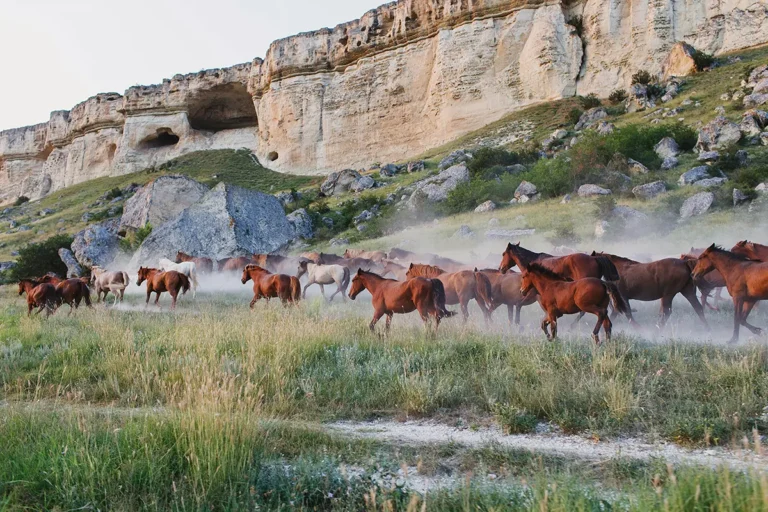
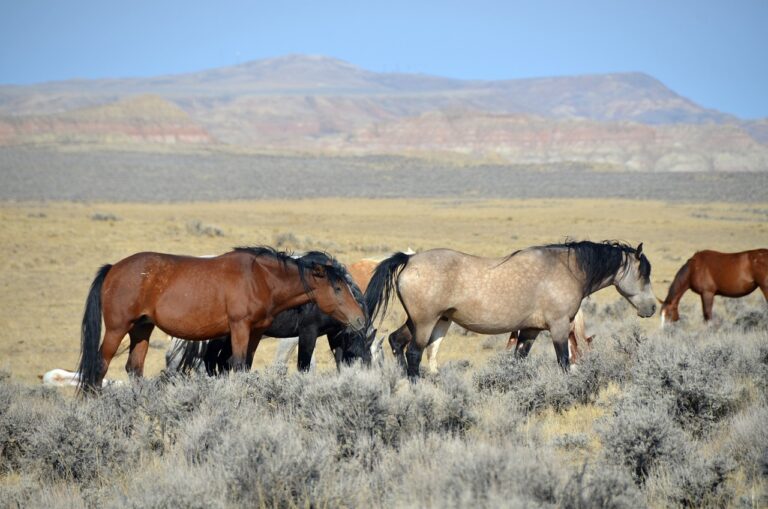
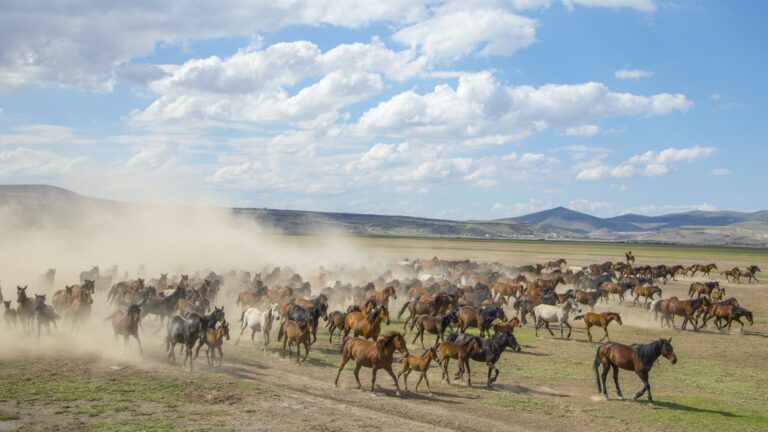
Colorado’s wild horses live out on the far western slope, in country that’s more sagebrush than ski resort. Out there, bands move along ridgelines, disappear into piñon–juniper draws, and sometimes graze close enough to the road that you can hear them cropping grass.
This Colorado Wild Horse & Burro Guide pulls together the four Colorado HMAs—Sand Wash Basin, Piceance–East Douglas, Little Book Cliffs and Spring Creek Basin—so you can plan respectful trips and learn more about adoption.
Today, BLM Colorado manages four wild horse Herd Management Areas (HMAs) on roughly 400,000 acres of public land:
- Sand Wash Basin HMA – northwest of Craig
- Piceance–East Douglas HMA – southwest of Meeker
- Little Book Cliffs Wild Horse Range – northeast of Grand Junction
- Spring Creek Basin HMA – Disappointment Valley in southwest Colorado
Each of these herds has its own landscape, legends, and volunteer community. And yes—Colorado is home to Picasso, the tri-color pinto stallion from Sand Wash Basin who became one of the most famous wild horses in America.
Quick Map of Colorado’s HMAs
Think of Colorado’s wild horses as a rough “C” shape around the western side of the state:
- Far Northwest – Sand Wash Basin
- Nearest town: Craig, CO
- Field office: Little Snake (Craig)
- Habitat: rolling sagebrush, badlands, rugged two-tracks
- Northwest – Piceance–East Douglas
- Nearest town: Meeker, CO
- Field office: White River (Meeker)
- Habitat: deep canyons, pinyon–juniper hills, oil and gas infrastructure
- West – Little Book Cliffs Wild Horse Range
- Nearest towns: Grand Junction / Palisade, CO
- One of only three wild horse “ranges” in the U.S. specifically designated for horse protection.
- Southwest – Spring Creek Basin
- Nearest towns: Dolores / Norwood, CO
- Field office: Tres Rios
- Habitat: Disappointment Valley’s open flats and surrounding mesas, with a small, closely watched herd.
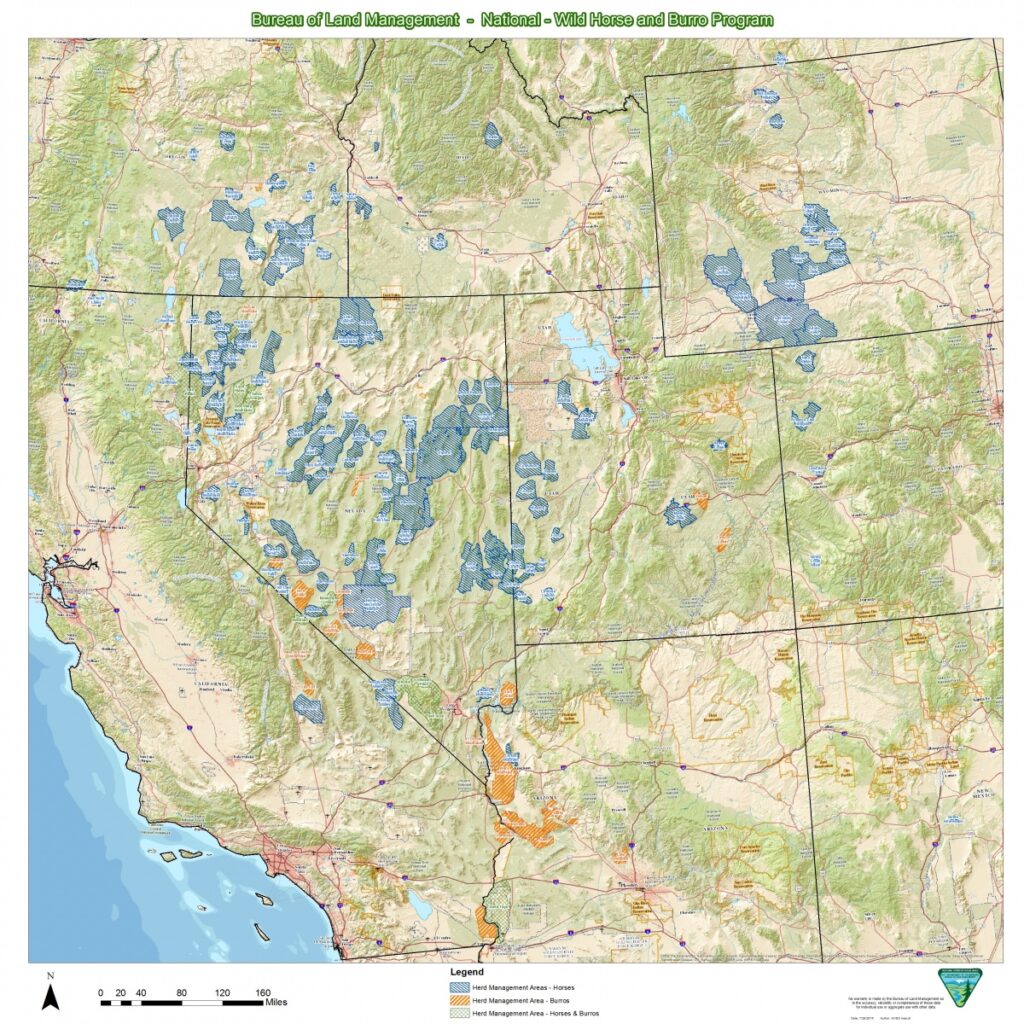
Note: The map below shows all the western states. I couldn’t find a single-page, public-domain Colorado-only map that would play nicely with WordPress, so this was the best option.
Sand Wash Basin HMA
Where it is
Sand Wash Basin lies north of U.S. 40, northwest of Craig, close to the Wyoming border. It’s classic sagebrush and badlands country—wide horizons, gumbo roads when wet, and not a lot of shade.
The herd & the land
Sand Wash is known for:
- Strong Spanish-type/Iberian influence in the herd
- A huge variety of colors: paints, duns, grullas, bays, roans, palominos, and more
- Long public history, with photographers, advocates, and visitors from all over the world
The range itself can be harsh: scarce water in dry years, strong winds, and heavy conflicts over forage and energy development.
Management snapshot
Sand Wash has seen several gathers and years of fertility-control work:
- Multiple helicopter gathers have reduced the herd size toward BLM’s appropriate management level (AML).
- Returned mares are often part of ongoing PZP darting programs to help stabilize the population on the range.
- Recent gathers have included bait-trap operations designed to reduce stress and avoid helicopter pressure when possible.
Two key volunteer groups support this herd on the ground:
- Sand Wash Advocate Team (SWAT) – documents horses, administers fertility control, partners directly with BLM.
- Wild Horse Warriors for Sand Wash Basin (WHW) – focuses heavily on range improvements like fencing, water projects, and signage.
Famous horse: Picasso & his legacy
If you’ve seen a photo of a wild pinto mustang on social media, there’s a good chance it was Picasso.
- Tri-color pinto stallion from Sand Wash Basin, often called “America’s most famous wild horse”
- Known for his striking markings, long mane, and the way he seemed to “pose” for photographers
- Believed to have died of natural causes after disappearing from regular sightings several years ago
His bloodlines live on in descendants like “Picasso Junior (PJ)” and other painted horses in the Basin, and in adopted Sand Wash mustangs scattered across the country. When you’re out there, it’s tempting to chase the legend—but the real magic is realizing every horse on the horizon has a story just as rich. Picasso just happened to be the one the world noticed.
How to visit Sand Wash Basin
- Access: Typically via Moffat County Road 67 north of U.S. 40 west of Craig. Roads are rough; high-clearance is strongly recommended, and in wet weather some routes become impassable gumbo.
- Best seasons: Late spring and fall, when temperatures are milder and horses are more active during daylight.
- On-range etiquette:
- Give bands plenty of space. Plan on staying 150–200 feet (50–70 yards) away as your normal distance; 100 feet is an absolute minimum and only for brief moments if you’re moving past or backing off.
- Stay off fragile desert soils and avoid driving cross-country.
- This is active energy-development country—watch for industrial traffic, cattle, and equipment.
Little Book Cliffs Wild Horse Range
Where it is
Just 8–10 miles northeast of Grand Junction / Palisade, the Little Book Cliffs Wild Horse Range rises up behind the Book Cliffs—the longest continuous cliff face in the world. Access is most commonly from the Coal Canyon Trailhead near the Cameo exit off I-70.
What makes it special
Little Book Cliffs is one of only three wild horse ranges in the U.S. specifically designated for wild horse protection, not just as a general multi-use HMA.
- Size: around 36,000 acres of canyons, mesas, and high-desert forest
- Herd: palominos, paints, bays, sorrels, grays, blacks, blue and red roans, appaloosas, and the occasional curly
It’s rugged, beautiful country—steep trails, narrow canyons, and big views over the Colorado River corridor.
Management snapshot
- Managed for a modest AML, with regular monitoring of range conditions
- Uses a combination of gathers and fertility-control darting to keep numbers in balance with forage and water
- Ongoing partnership with local volunteers to maintain trails and infrastructure
The Friends of the Mustangs volunteer group:
- Maintains trails and water sources
- Helps remove old barbed wire and debris
- Works with BLM on fertility control and range projects
- Provides adopter resources and educational outreach
Famous or notable horses
Little Book Cliffs doesn’t have one single “Picasso-level” celebrity, but it does have many well-known bands that local volunteers and photographers follow closely. Friends of the Mustangs often share “Meet the Mustangs” posts—if you’re planning a trip, their website or social pages are a great place to get to know a few faces before you go.
How to visit Little Book Cliffs
- Main access: Coal Canyon Trailhead from Exit 45 (Cameo) on I-70, then follow BLM signs along a dirt road into the canyon.
- Season & conditions:
- Spring and early summer: cooler temps, green-up, and foals along streams—prime viewing season.
- Summer: very hot; horses tend to head to higher, more remote elevations.
- Fall: beautiful light, but shorter days and cooler nights.
- Trail notes: Some routes are steep and rocky; good footwear, sun protection, plenty of water, and weather awareness are essential.
Piceance–East Douglas HMA
Where it is
The Piceance–East Douglas Herd Management Area (often shortened to “Piceance HMA”) lies southwest of Meeker and east of Highway 139. It spreads across roughly 190,000 acres of canyons, ridges, and energy fields.
The herd & the land
Horses here tend to show ancestry from gaited and light riding breeds, with a mix of solid colors:
- Bays
- Sorrels and chestnuts
- Browns
- Some duns and roans
It’s classic gas-patch country: well pads, roads, pipelines, and sagebrush ridges all braided together. The horses share the landscape with cattle and a busy web of oil and gas activity.
Management snapshot
- AML for the HMA is relatively low compared to the size of the landscape.
- Over the years, population estimates have reached several times AML, leading to repeated gathers.
- Recent gathers have aimed to remove large numbers of horses, then use fertility control and monitoring to slow the rebound.
Because of the heavy development footprint, Piceance is one of the more controversial HMAs in terms of competing land uses and repeated gathers. Many horses removed from Piceance have gone into off-range holding and adoption.
Famous horses
Piceance doesn’t have a single, widely recognized “poster horse” the way Sand Wash does, but it does have a strong following among mustang advocates and adopters. Local groups and social media pages often spotlight:
- Longtime band stallions and lead mares
- Horses that have returned to the range after gathers
- Piceance-bred mustangs thriving in new homes across the country
How to visit Piceance–East Douglas
- Access: Many two-tracks and lease roads branch off County Road 5 and other local roads southwest of Meeker. Always check current BLM maps and heed private property and industry access signs.
- Conditions:
- High-clearance strongly recommended.
- Active oil and gas activity means heavy truck traffic on some roads—drive defensively and yield plenty of space.
- Viewing tips:
- Look for bands near water sources and in open parks at dawn and dusk.
- Binoculars make a big difference here because the country is broken and the horses can be half a ridge away.
Spring Creek Basin HMA
Where it is
Spring Creek Basin sits in Disappointment Valley in southwestern Colorado, west of the San Juan Mountains and not far from Dolores and Norwood.
The herd & its story
Local legend says the Spring Creek Basin horses descend from a Montana rancher who brought a herd of stolen horses to the area in the early 1900s to sell to the Cavalry. When the law closed in, he left in a hurry—his horses stayed.
Today, the herd is small—typically under 100 horses—and known for:
- Bays, sorrels, grays, and pintos
- Compact, hardy builds (often around 14 hands and 700–800 lbs) that fit the tough country
- Strong family bands that advocates have followed and documented for decades
Model for humane management
Spring Creek Basin has become a national example of on-range, fertility-control-based management:
- Public/private partnership between BLM and advocates
- No livestock grazing inside the HMA
- Emphasis on PZP darting, careful monitoring, and avoiding helicopter gathers when possible
Advocate TJ Holmes and the Spring Creek Basin Mustangs community have spent years documenting individual horses, bands, foal crops, and management outcomes. If you love data and stories, their website and social posts are a rabbit hole in the best way.
Famous horses: Sundance & friends
Outdoor writers and photographers have highlighted individual Spring Creek horses over the years, especially stallions like Sundance—often recognized by his long white mane and battle scars, held up as a symbol of Disappointment Valley.
The Spring Creek Basin Mustangs blog and pages also share the stories of:
- Longtime lead mares
- Yearlings and foals that grew into band stallions
- Older horses living out their days on the range
How to visit Spring Creek Basin
- Access: Typically via back roads off CO-141 and CO-145—conditions vary widely with weather. Check in with the BLM Tres Rios Field Office or local advocate pages before heading out.
- Conditions:
- Remote, with few services—bring water, fuel, and a real spare tire.
- Weather can flip from blazing sun to sudden storms, and clay roads can become slick and dangerous.
- Viewing tips:
- Early mornings and evenings near water or open benches are your best bet.
- Watch for bands silhouetted against the skyline on low mesas.
Seeing Colorado’s Wild Horses Respectfully
Wherever you go—Sand Wash, Little Book Cliffs, Piceance, or Spring Creek—the basics of respectful watching stay the same.
1. Put the horse’s needs first
- Distance: Use 150–200 feet (50–70 yards) as your standard viewing distance. That gives stallions, mares, and foals room to feel safe and make their own choices. Treat 100 feet as an absolute minimum and only for short periods if you’re actively moving away. Use your camera’s zoom instead of your feet.
- No feeding, touching, or calling them in. Even a “little treat” teaches bad habits and can get horses or people hurt later.
- Keep dogs leashed and truly under control. A chasing or barking dog can get kicked, trampled, or cause a band to panic.
2. Watch the land under your boots and tires
- Stay on existing roads and established trails.
- In fragile desert soils, avoiding cross-country driving may matter more than you think—those “crusty” surfaces can take decades to recover.
- Close any gates you open unless it’s clearly signed to stay open.
3. Read their body language
- Ears pinned, neck snaking, tail swishing, hoof stamping, repeated head tossing, or stallions posturing can all be signs you’re too close and need to back off.
- If a horse changes what it was doing just because you arrived—walking off water, moving foals behind a ridge, bunching tightly—you’re probably crowding them. Back off until they go back to grazing, dozing, or traveling normally.
4. Share the space with other users
All four Colorado HMAs see some mix of:
- Hunters and anglers
- Energy workers and ranch traffic (especially in Piceance and Sand Wash)
- Hikers, trail riders, campers, and photographers
Be visible, be courteous, and remember that not everyone understands horses the way you do. Sometimes you’ll be the one quietly setting the example.
Adoption, Famous Colorado Mustangs & How to Help
Adoption & holding
- As gathers continue in Sand Wash, Piceance, Little Book Cliffs, and Spring Creek, many Colorado-bred mustangs pass through short-term holding and adoption events:
- BLM Colorado regularly hosts adoption events at locations like Cañon City and Grand Junction, and offers Colorado horses through the online adoption platform.
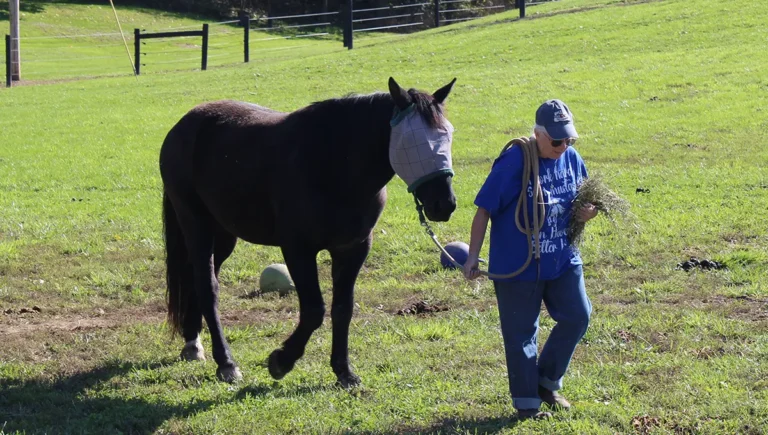
- The long-running Wild Horse Inmate Program at Cañon City trained many Colorado mustangs for adoption; even as that program winds down, its graduates are still out there carrying riders, packing into wilderness, and sleeping in backyards all over the country.
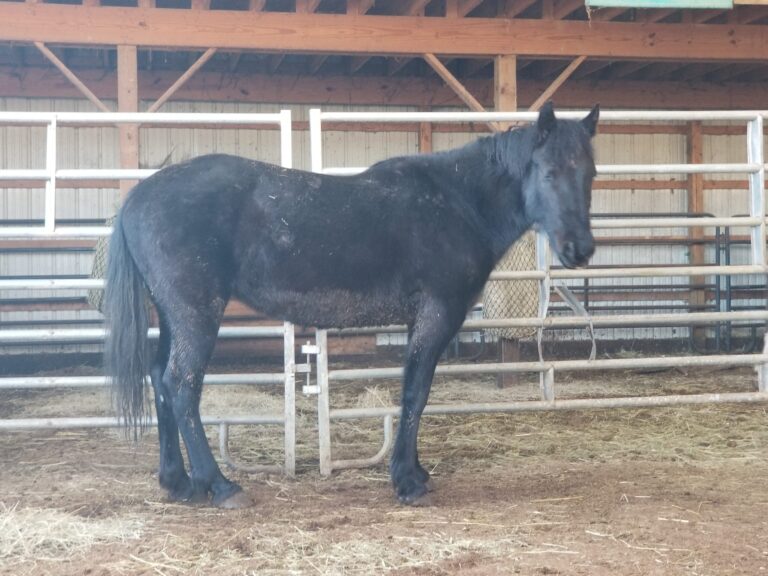
If you’re drawn to Picasso’s descendants, a Sand Wash “plain bay” with that look in his eye, or a sturdy Spring Creek mare with a long family history, there’s a good chance your future trail partner is already standing in a corral somewhere waiting for the right human.
For current management details and gather updates, visit the BLM Colorado Herd Management Areas page.
Local groups & resources
If you want to go deeper, these Colorado-based groups are good starting points:
- Sand Wash Advocate Team (SWAT) – on-range partner for Sand Wash fertility control and documentation.
- Wild Horse Warriors for Sand Wash Basin – range projects and advocacy in Sand Wash.
- Friends of the Mustangs – volunteer group for the Little Book Cliffs herd; also offers adopter resources.
- Spring Creek Basin Mustangs – long-term documentation and fertility-control work in Spring Creek Basin.
- Colorado Mustang Coalition – statewide hub for events, sanctuaries, and adoption information, including Sand Wash and Piceance horses coming out of holding.
Have a photo or correction to share?
These guides are a work in progress, and I want them to reflect both the horses and the people who care about them.
If you spot something that is out of date, a detail that is wrong, or a link that no longer works, please let me know so I can get it fixed. Management plans and gather schedules change often, and I want this page to stay useful for you and for the horses.
If you are a photographer or an adopter and would like to see your Colorado mustang featured here, I would love to talk with you. I always use photos with clear written permission and proper credit. If you’d like to see how that looks in practice, visit our Oregon guide to see how I used Mustang Meg’s photos with her blessing.
For this Colorado guide, I would especially love to feature a photo of the Sand Wash stallion Picasso as the main image. If you have a Picasso photo you’re willing to share, here’s what I’m looking for:
- Horizontal/landscape orientation
- At least 2000 pixels wide (larger is great; I can resize)
- Sharp, high-resolution JPEG suitable for a full-width featured image
- Minimal or no watermark so readers can focus on the horse (I’ll give full credit in the caption and, if you’d like, in the text)
To share a photo or correction, please reach out through the Contact page and include “Colorado wild horses” in the subject line so I can find it easily. I’ll reply to confirm how the image will be used and how you’d like your credit to appear.
Read the State Guides
These guides are coming online one by one. If a title doesn’t have a link yet, it just means I’m still writing it—check back soon.
Last checked: December 1, 2025.