Learning to Listen Instead of Demand
I am learning to listen to my horses–in their language. I read something today that stayed with me because it gave words to a truth I have been learning, slowly and sometimes uncomfortably, with my own horses. It was about a horse who came back looking calm on the outside, but absent on the inside. The kind of horse people often praise because he stands quietly, tolerates everything, and does not make trouble. But the person writing it understood what she was really seeing. She* was not looking at peace. She was looking at withdrawal. She was looking at a horse who had learned that speaking up did not change anything.
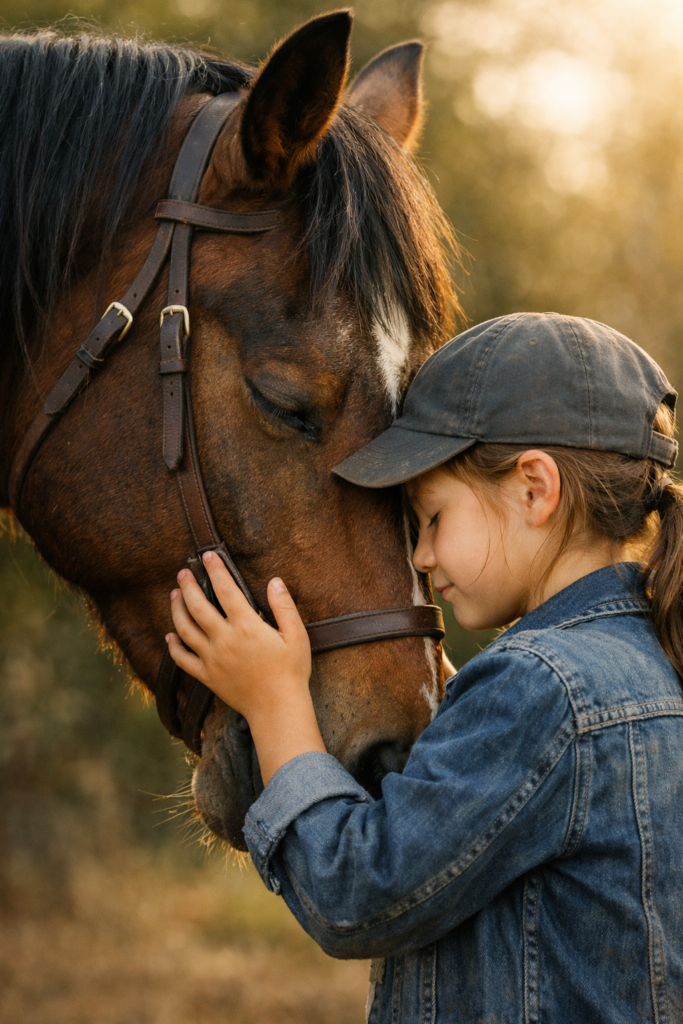
That struck me because, in my own way, I have been rethinking what we so often call a “good horse,” and what we may sometimes miss when we say it. Before Floki and Lagertha, I would have said I was already on the gentler side of training, and compared to a lot of what I had seen, that was true. I was never comfortable with harshness for its own sake. I believed in patience, in slowing down, and in meeting frightened horses with more kindness, not more pressure.
I still believe those things matter. Gentleness matters. Patience matters. Kindness matters. But I have also had to be honest with myself and admit that even when I was being gentle, the horse was still usually expected to comply in the end. The methods may have been softer, and the pace may have been slower, but it was still largely about getting the horse to accept what I wanted. That is the part I see differently now.
Floki and Lagertha have made me think much more deeply about the difference between a horse who has stopped resisting and a horse who is truly participating. Those are not the same thing. A horse can grow quiet without feeling secure. A horse can look easy without actually feeling safe. A horse can stop objecting because objecting has never helped. When that happens, it can look like calm if all we are measuring is behavior, but it is not always trust, and it is not always peace.
What makes this easier for me to understand is that people do this too. When a person grows up in an abusive environment, and they learn that there is no way to “win,” that nothing they do will ever be right, many of them stop trying to fight it. They go inward. They get quiet. They detach. On the outside, that can look like compliance, calmness, or maturity, but what it often really reflects is a nervous system that has learned there is no safety in speaking up.
That is part of what struck me so hard about the story I read. The horse in that post was not truly “fine.” He had learned to disappear inside himself because that felt safer than continuing to protest. Abused children can do the same thing, and many adults carry that pattern with them for years, sometimes for the rest of their lives.
Not every wounded being goes quiet, though. Some humans become angry instead of absent, and some horses do too. Those are often the ones labeled difficult, dangerous, or outlaws, when what may really be showing through is pain, fear, and a long history of not being heard. Society tends to be far more comfortable with the shut-down ones than the explosive ones, but both can come from the same place: a life spent learning that safety was never guaranteed.
That is one reason this matters so much to me. If we only reward silence and punish visible distress, we can mistake survival responses for character flaws. We can call a horse “good” because he has disappeared inward, and call another “bad” because his fear comes out sideways. In both cases, we may miss the living mind underneath the behavior.
That is what I keep coming back to.
What I want now is not forced compliance in gentler packaging. What I want is a conversation. I want to leave room for the horse to have a voice, and I want to become better at hearing it. That does not mean there are no boundaries, and it does not mean safety stops mattering. Horses are large animals, and humans are fragile. Some things still have to be asked. Some situations still require clear structure. But even within those realities, there is often more room to listen than we think.
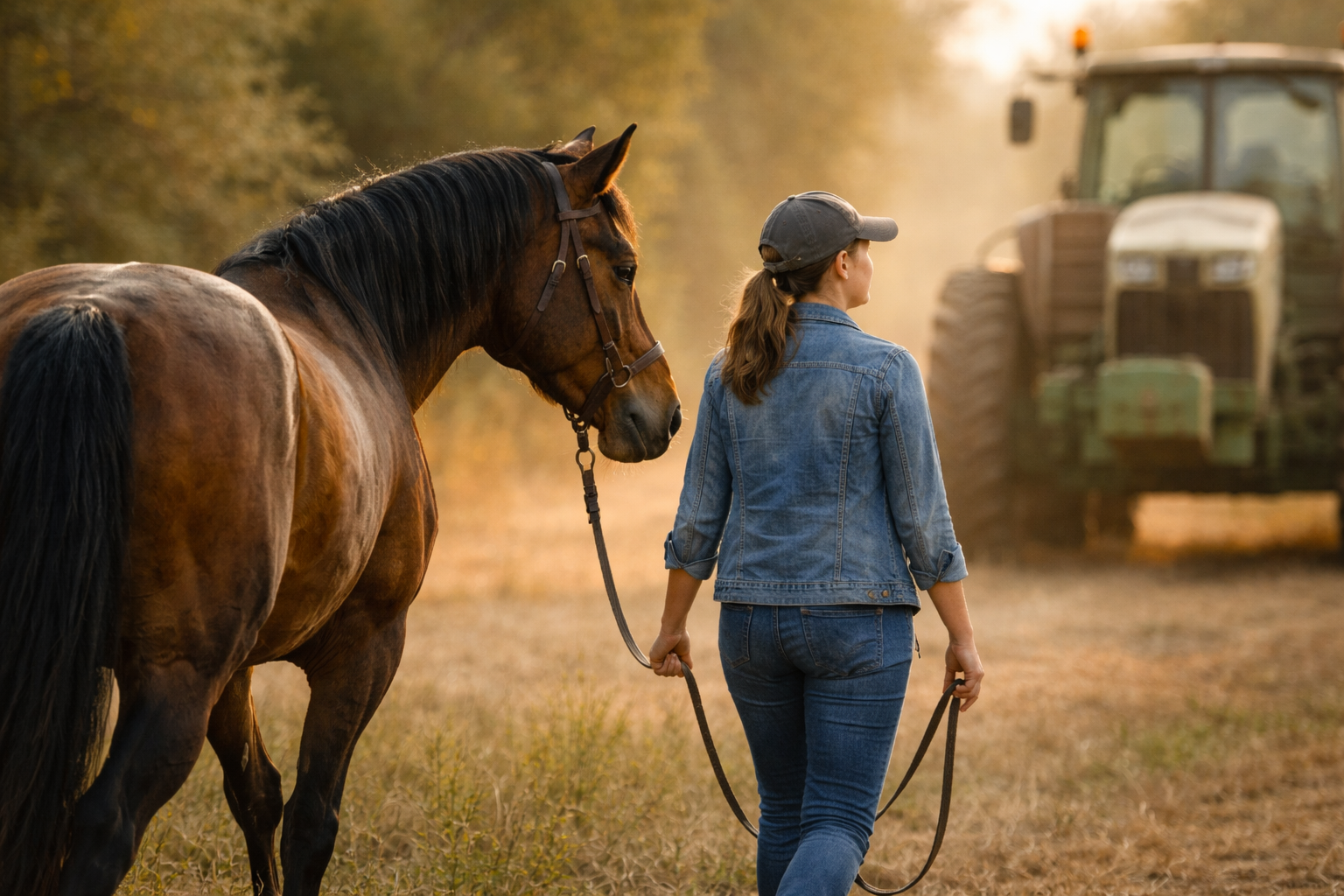
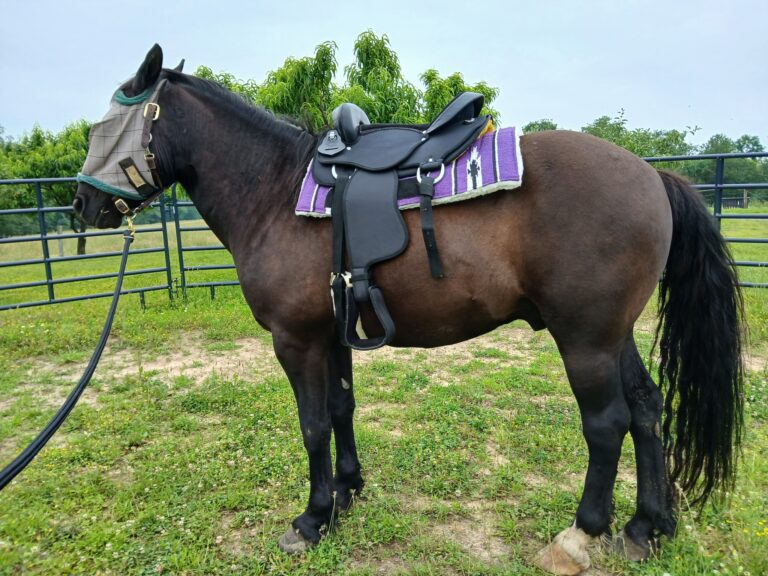
One simple example of that for me is how I lead Floki. Traditionally, people often expect a horse to walk on a particular side and stay there because that is the accepted way. But Floki does not like to be micromanaged, and I have learned that if something feels threatening to him on my right side, he is more comfortable if I let him drift behind me and move to my left until we are past it. So I let him.
I don’t insist that he stay in the “correct” position just because that is what is traditionally expected. I let him make that choice, because in that moment he is telling me where he feels safer, and I would rather listen to that than win a pointless argument about form.
In practice, it makes both of us happier. He gets to use his own judgment and feel that I am paying attention to what he needs, and I get to be his safety net instead of another thing he has to brace against. It is also safer for me, because if he ever did spook, he would be moving away from me instead of over me. That may seem like a small thing, but to me it is not small at all. It is one of the ways I am learning that respecting a horse’s voice does not create chaos. It creates trust.
I am still learning this. I don’t always get it right. Sometimes I miss things. Sometimes I realize afterward that I could have slowed down sooner, listened better, or asked less. I am not writing this as someone who has figured it all out—I’m writing it as someone who has changed, and who wants to keep changing.
There is a saying that goes, “When you know better, you do better.” I don’t know who first said it (maybe Warrick Schiller, who advocates and lives this kind of connection with horses), but it feels true. Sometimes knowing better does not come in one dramatic moment. Sometimes it comes slowly, through experience and reflection, as we begin to notice that what once felt normal may not have been as respectful as it could have been.
That is what these horses have given me. They have changed the way I think about partnership. I don’t want a horse shaped into convenience. I don’t want a horse made smaller just so I can feel more in control. I don’t want to call a horse “good” when what I really mean is that he has stopped objecting.
I want something better than that, and I think a lot of horse people do too, even if we are still learning how to get there.
I want a relationship that leaves room for the horse’s mind, not just his body. I want to remember that horses are sentient beings with feelings, preferences, worries, and opinions, and that those things matter. I want to treat them like living minds, not simply animals whose job is to yield.
That is the lesson I am still learning from Floki and Lagertha. They are teaching me not just how to be softer, but how to listen better. They are teaching me to ask more carefully, to notice more, and to remember that silence is not always agreement. Most of all, they are teaching me that honoring a horse’s spirit is not the opposite of good horsemanship. It may be the beginning of better horsemanship.
I read a post today that touched this exact nerve for me, and I am grateful for it because it put clear words to something many of us may already be feeling: that maybe the goal should not be to make horses easier for us, but to become more worthy of their trust. If you would like to read it, I am sharing it here:
For me, this has become part of the deeper promise I am trying to keep with the horses in my care: not only to protect their bodies, but to respect the living minds inside them.
Notes About Learning to Listen:
If this way of thinking about horses speaks to you, you may also want to read more about Floki and Lagertha, the deeper promise behind this work, or take a quiet break with one of the Trail Breaks puzzles. We have a Word Search puzzle that specifically goes with this post, called “Trail Break: Listening Instead of Demanding.” All of these subjects are clickable links.
*I am assuming that the author is female because all of the images on her site that have humans seem to be of women, but they are apparently all AI generated, so I’m not positive. If I’ve made a mistake, please forgive me for assuming incorrectly. If you let me know, I can correct it.
One Comment