Does Your Horse Notice When Something Changes?
Does your horse notice when something changes in you before you do? Earlier this year, I began to suspect mine did. What I saw was not dramatic behavior or obvious refusal, but quieter shifts: a little more hesitation, a little more distance, a little more caution. In this post, I’m sharing what changed, how Floki and Lagertha responded, and why I think horses may pick up on subtle human changes long before we fully understand them ourselves.
Horses live in a world of details. A change in breathing. A change in movement. A change in the feel of a body walking toward them. A change in scent. They read things most of us would miss completely, and sometimes they react to those shifts before we even understand that anything has changed at all.
That idea has been on my mind lately, because earlier this year I began to suspect that my own horses were picking up on something different about me. Not in some dramatic, cinematic way. Not with a big blowup or a clear refusal that would let me point to one obvious moment and say, there, that’s it. It was smaller than that. Quieter. The kind of change horse people know is real even when it is hard to prove.
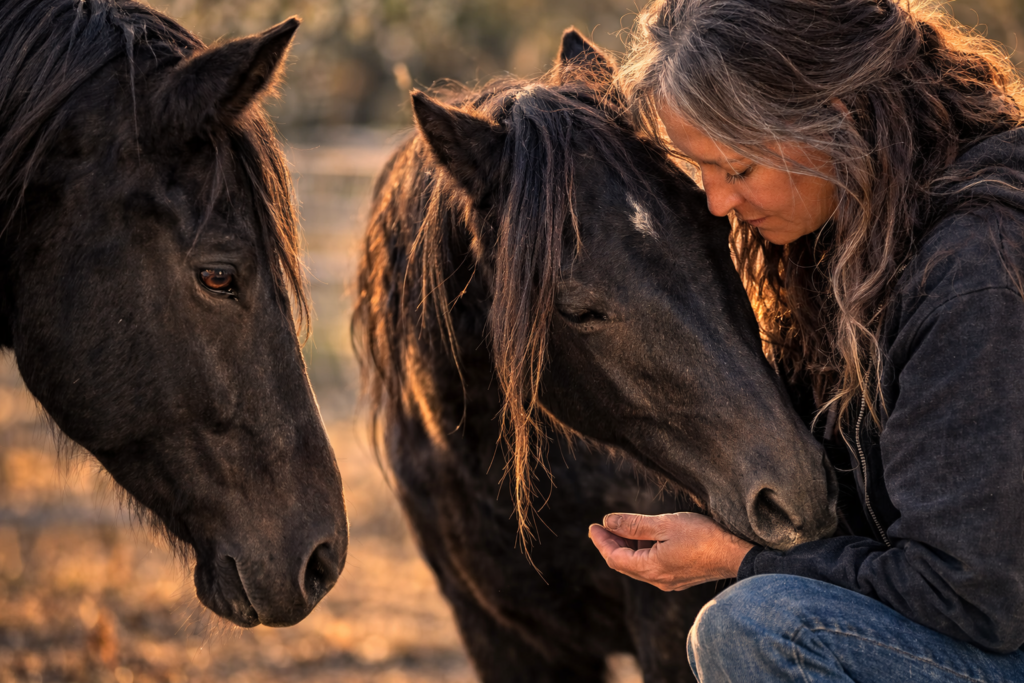
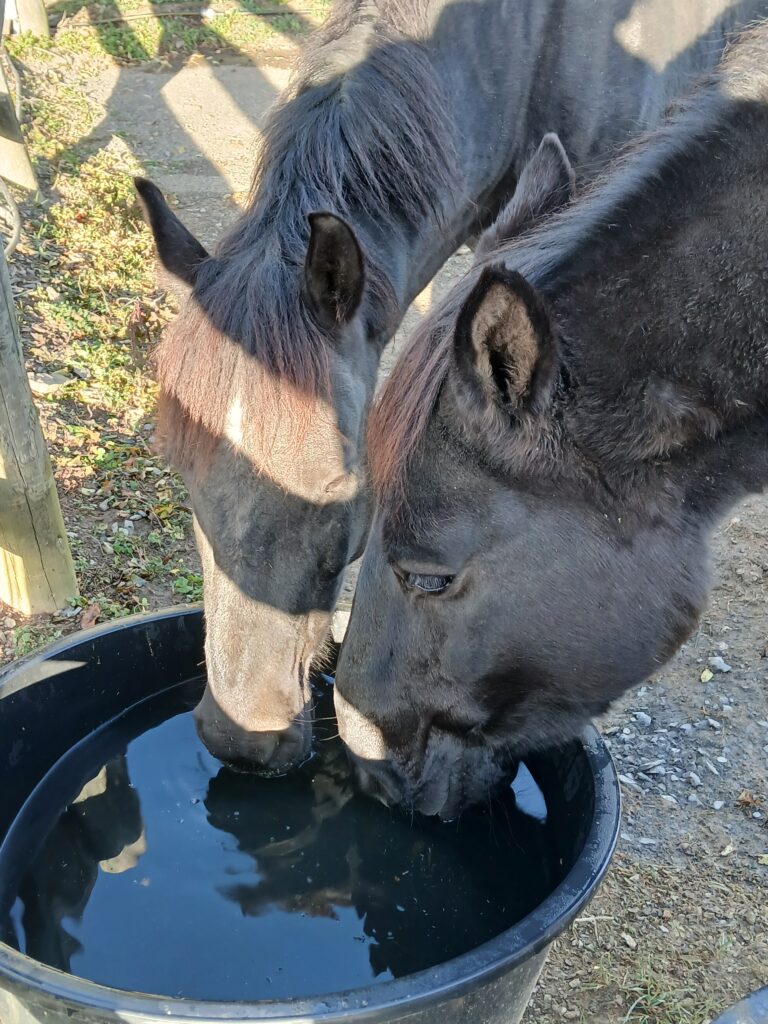
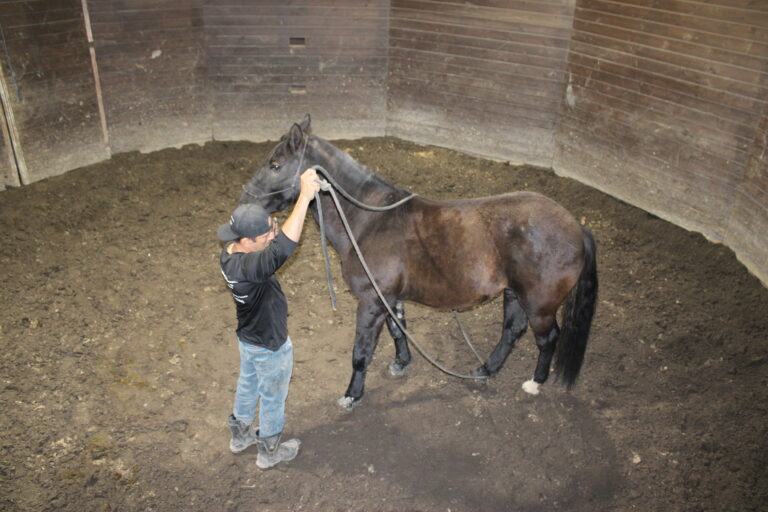
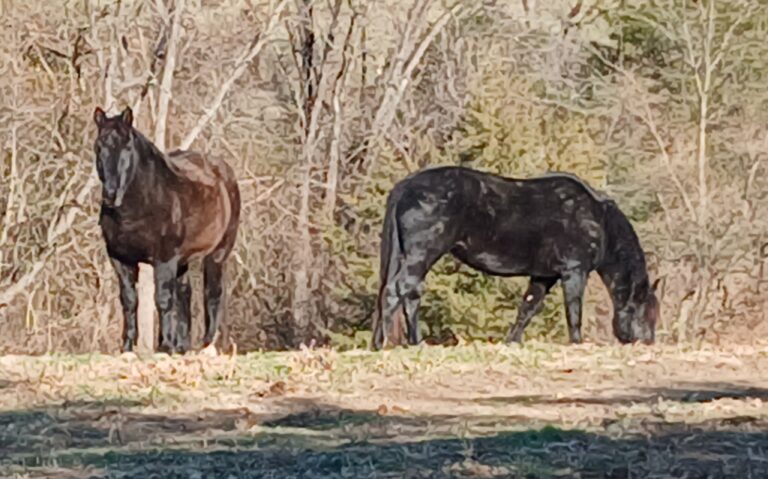
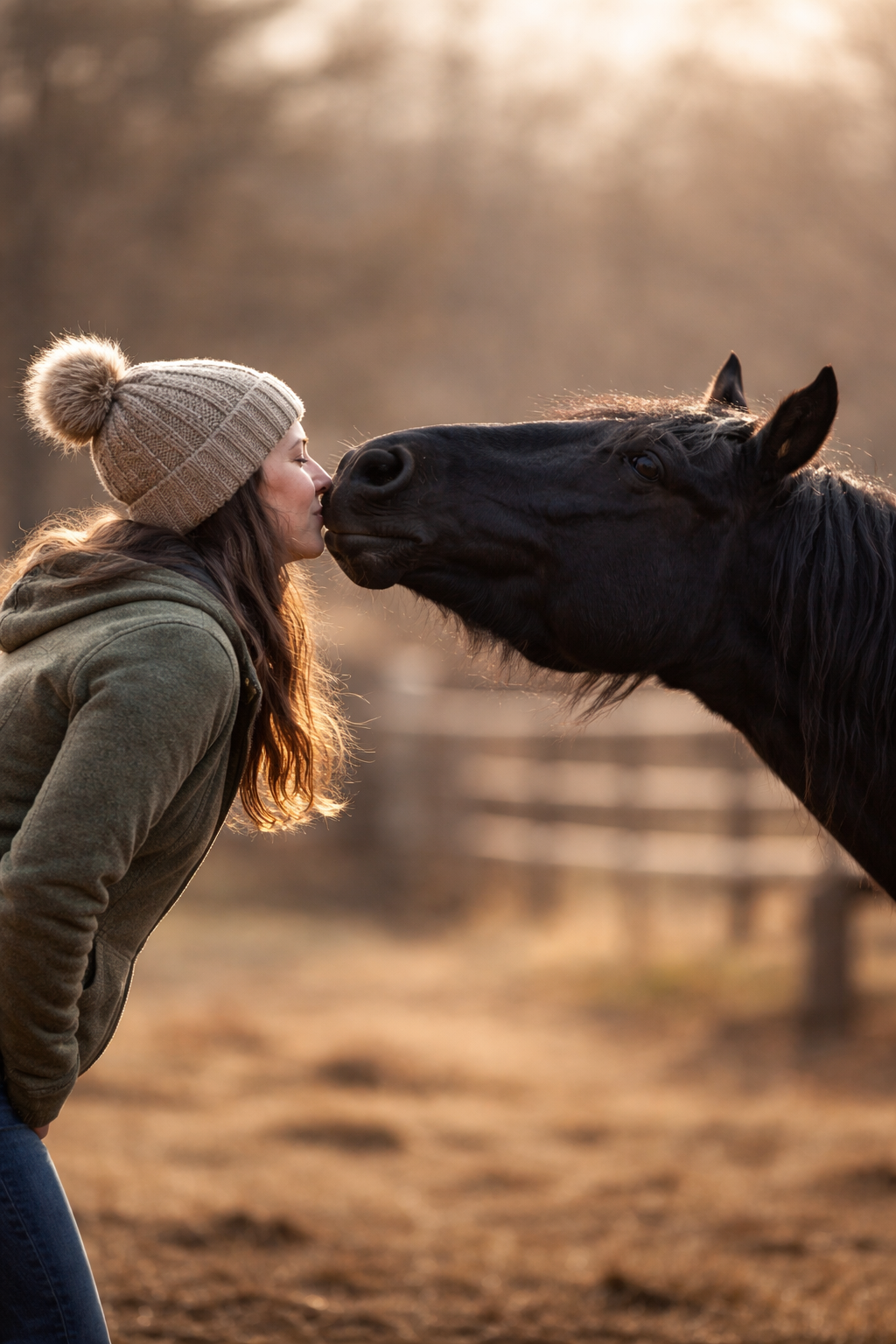
Floki still came over, but not quite the same way. The kisses landed from farther away. Haltering became a little harder. Lagertha felt changed too, and she became more hesitant about cheek touch. She’s come back around more quickly, as if whatever felt different to her began to resolve sooner. Floki is getting there too, but he has always been the more cautious one, and with a horse like that, small shifts can land big.
I can’t prove exactly what changed, or what they were picking up on. I only know that something felt different for a while, and the difference seemed to matter to them.
I think a lot of horse people have lived through some version of this and never quite known what to call it. Maybe you got sick. Maybe you started a new medication. Maybe you came home from the hospital. Maybe your stress changed, your hormones changed, your movement changed, your breathing changed, or something in your scent shifted in a way you never would have noticed on your own. And suddenly your horse, who knew you perfectly well yesterday, seemed to need a little more information today.
That’s one of the hardest things about horses. They react to changes we can’t always measure, and if the shift is subtle enough, we start doubting ourselves. We tell ourselves we’re imagining it. We blame the weather, the season, the footing, the mood of the day. Sometimes those things really are the answer. But sometimes the horse may be telling us something simple and honest: you do not smell, move, or feel quite the same to me right now.
That possibility is one reason this experience kept tugging at me. I wasn’t seeing major acting out or obvious trouble. What I was seeing was hesitation. A little more distance. A little more caution. The kind of response that can be easy to dismiss unless you know your horse well enough to feel the difference.
A 2023 Scientific Reports research paper has shown that horses can distinguish between some human body odors associated with different emotional states, and newer work, a 2026 PLOS One paper suggests those odors may even influence how willing horses are to interact. That doesn’t prove any one medication or illness caused any one horse’s reaction. But it does support the idea that horses may be picking up on subtle changes in us long before we understand them ourselves.
And honestly, that idea makes sense to me even without the research.
Horses are prey animals. They survive by reading the environment, reading each other, and reading us. Scent matters to them. Rhythm matters to them. The way a body moves matters to them. The amount of tension in a hand, the speed of a step, the feeling behind an approach, all of it matters. We are often the ones trying to sort those things into categories. The horse is simply experiencing them as information.
That’s part of why I no longer think this kind of thing is foolish to wonder about.
Earlier this year, after a health scare, I started a new medication. Around the same time, I also began dealing with low-level side effects that made me feel physically different in ways I couldn’t ignore. I don’t know whether my horses were responding to the medication itself, to changes in my body, to changes in my scent, to changes in my tension, or to some combination of all of it. I only know I had the growing sense that they were noticing something before I fully understood it myself.
That has made me think differently about how easy it is to label a horse as difficult, standoffish, resistant, or off when maybe the horse is simply sorting through new information.
This is not veterinary advice, and I am not claiming a proven cause-and-effect relationship between a medication and horse behavior. I’m only sharing my experience, and the possibility that horses may notice changes in us long before we understand them ourselves.
What helped with my own horses was not pushing through it as if nothing had changed. Less pressure helped. More softness helped. Time helped. Mostly, I think what helped was respecting the possibility that they were not being difficult at all. They may simply have been trying to make sense of something unfamiliar in the only way horses can: through distance, caution, and observation.
Lagertha has eased back toward normal faster. Floki is slower, which makes sense to me. The more cautious horse is often the one who notices the shift first and trusts it last. That doesn’t mean the bond is broken. It means he is still being honest.
And maybe that is the part I most want to say clearly: if something like this has happened to you, I don’t think you’re necessarily imagining it.
I don’t think every horse response can be reduced to stubbornness, randomness, or bad behavior. Sometimes the change really may be in us, even if it is subtle, invisible, and hard to explain. Horses live in a world of scent, tension, rhythm, and detail. They may notice what changed before we do.
The good news is that mine are slowly coming back to where we were before. Lagertha more so than Floki, but both seem to be finding their footing again. Or maybe it would be fairer to say that we are finding it together.
That may be one of the most honest parts of living with horses. Sometimes progress is not about teaching something new. Sometimes it is about recognizing that something shifted, even quietly, and giving the relationship room to settle back into itself.
*This is not veterinary advice, and I am not claiming a proven cause-and-effect relationship between a medication and horse behavior. I’m only sharing my experience, and the possibility that horses may notice changes in us long before we understand them ourselves.
Does Your Horse Notice When Something Changes in You?
Have your horses ever acted differently around you after a new medication, an illness, a medical emergency, or some other physical change? Did they get more distant, more watchful, harder to halter, or hesitant about touch? I’d truly love to hear your stories, because I have a feeling this happens more often than people realize.
If you’re new to Fading Hoofbeats, start with Welcome to Fading Hoofbeats.