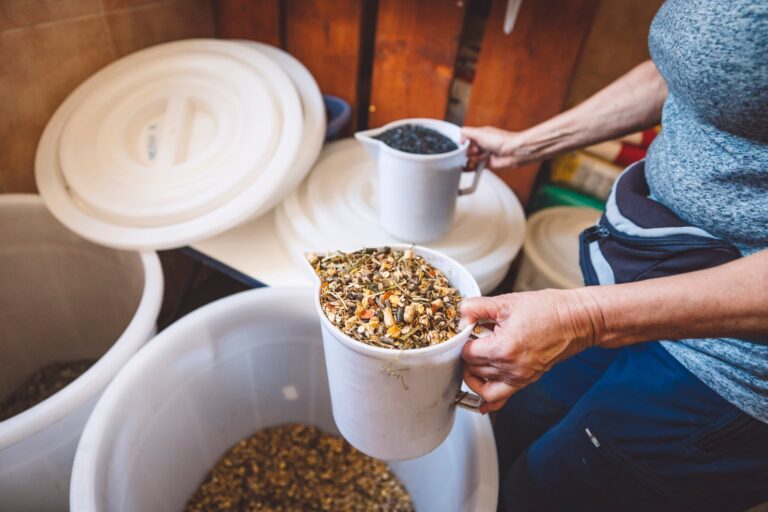
A Horse Herb Garden: A Simple Way to Give Horses More Choice
Note: This post replaces an earlier version of this article, updated with clearer instructions and improved design ideas.
Most horses don’t get much say in what goes into their bodies.
We decide what hay they eat, what supplements they get, when they graze, when they don’t, and what counts as a treat. Some of that is necessary. Good care requires human judgment. But I still think it matters to remember how little choice most domestic horses actually have.
That’s one of the reasons I like the idea of a horse herb garden so much.
A horse herb garden won’t replace good nutrition, good hay, or veterinary care. It isn’t magic, and it doesn’t need to be treated like some kind of cure-all. What it can do is offer something many horses rarely get enough of: safe variety, enrichment, and a little room for preference.
That matters to me.
I’m always interested in ways to make life feel a little more interesting, a little more horse-centered, and a little less controlled for the sake of convenience alone. Water buffets are one example. Track systems can be another. A horse herb garden fits into that same general idea. It gives horses access to safe plants they can investigate, sample, ignore, revisit, and enjoy on their own terms.
This isn’t about controlling what they eat—it’s about giving them safe choices and letting them explore.
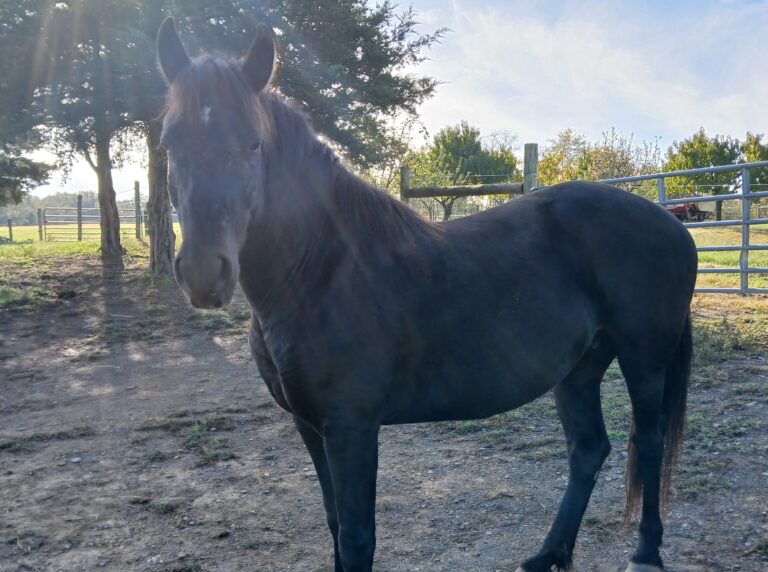
For my mustangs, Floki and Lagertha, that kind of thing feels especially worthwhile. I can’t give them back the life they came from, but I can keep looking for ways to make this life feel more respectful and more horse-centered, which is closely tied to what I wrote in Does Your Mustang Accept You as Part of the Herd?
A planter-style herb garden is one simple way to do that.
Why a horse herb garden can be worthwhile
A horse herb garden can offer more than just something pretty to look at.
It can provide sensory enrichment, safe novelty, and a little variety in taste and texture. It can also become one more quiet way to observe your horse. Some horses go straight for certain plants. Some sample everything. Some ignore a plant for weeks and then suddenly decide it matters. Watching those preferences is part of the value.
I also like that it can be offered without turning into a free-for-all.
If you protect the plants with a safe top or lid, horses can nibble what grows through without ripping everything out by the roots on day one. That means the garden has a chance to last longer, and the horses still get to enjoy it.
A few important cautions first
Before planting anything for horses, do your own research.
Do not rely on one blog post, one social media graphic, or one random list online. Check multiple reputable sources, and when in doubt, ask your veterinarian or an equine nutritionist. That matters even more if your horse is metabolic, has a medical condition, or is on medications.
Just because a plant is “natural” does not automatically mean it is appropriate for every horse.
Also, do not use insecticides, herbicides, or chemical fertilizers on plants intended for horses. If the plant absorbs it, your horse may be consuming it too.
And as always, safe construction matters. Horses are very good at finding the weak spot in any setup, especially if food is involved.
If you’re looking for ideas beyond crates, I’ve seen some really creative designs, including planters made from half-barrels. One example that stood out to me came from the Enrichment for Horses community, where people share all kinds of thoughtful enrichment ideas for their horses.
How I’d build a simple horse herb garden
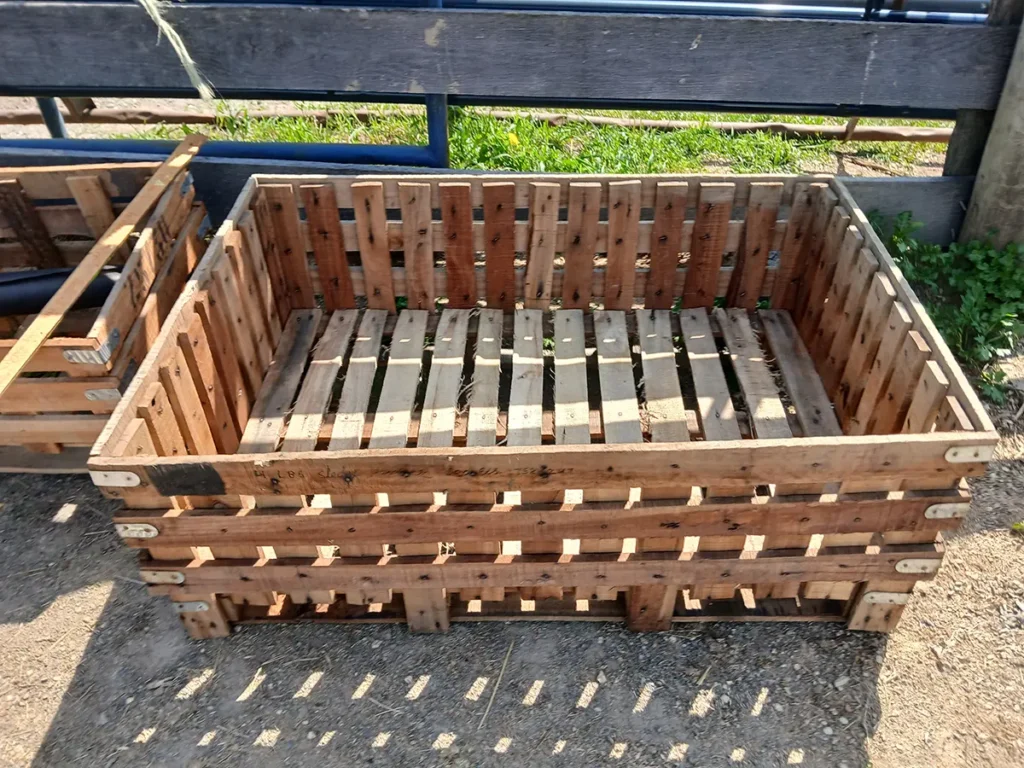
You do not need a fancy setup. A raised planter, crate, barrel, or other sturdy container can work as long as it is safe, drains well, and can be covered in a way that protects the plants while still allowing the horses to nibble what grows through.
- 1. Choose a sturdy container
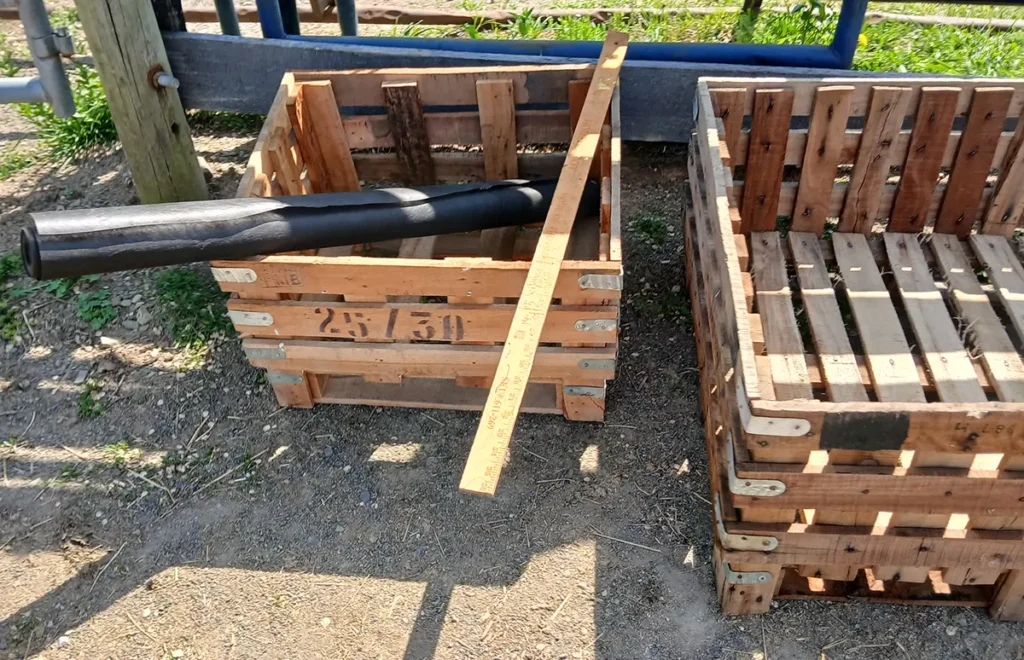
- You can use wooden crates, raised planters, half barrels, trough-style containers, or another safe repurposed container. Avoid anything with dangerous edges, unstable sides, or materials you would not want exposed to moisture, heat, and horse mouths.
- I’d skip tires as actual planting containers for this purpose. If you use one at all, I’d only use it to help stabilize another container rather than planting directly into it. The chemicals in tires can leach into soil and be absorbed by plants, which can be dangerous for horses.
- 2. Make sure it drains properly
- If the container has open slats, line it with landscape fabric to help hold the soil while still allowing drainage. If it is solid, drill drainage holes in the bottom. Most herbs do not want to sit in soggy soil.
- 3. Pick the location before you fill it
- This part matters more than people think.
- Once filled with soil, a planter can become extremely heavy. Put it where you want it before adding dirt. It also helps to place it near a water source if possible, because hauling buckets to water plants all summer gets old in a hurry.
- 4. Fill it with decent soil
- Good garden soil, topsoil improved with compost, or a quality planting mix can all work. You want something that will support healthy growth without turning into a compacted mess. Compost can help if the base soil is poor.
- 5. Leave a little headspace if needed
- If you plan to add a protective lid or wire top, it can help to leave a few inches between the soil surface and the cover. That gives the plants a little room to establish before your horses start reaching for them.
- If you are planting low-growing herbs, though, you may need less headspace so they can still reach the openings once mature.
- 6. Add a safe protective top
- This is the piece that makes the whole thing work.
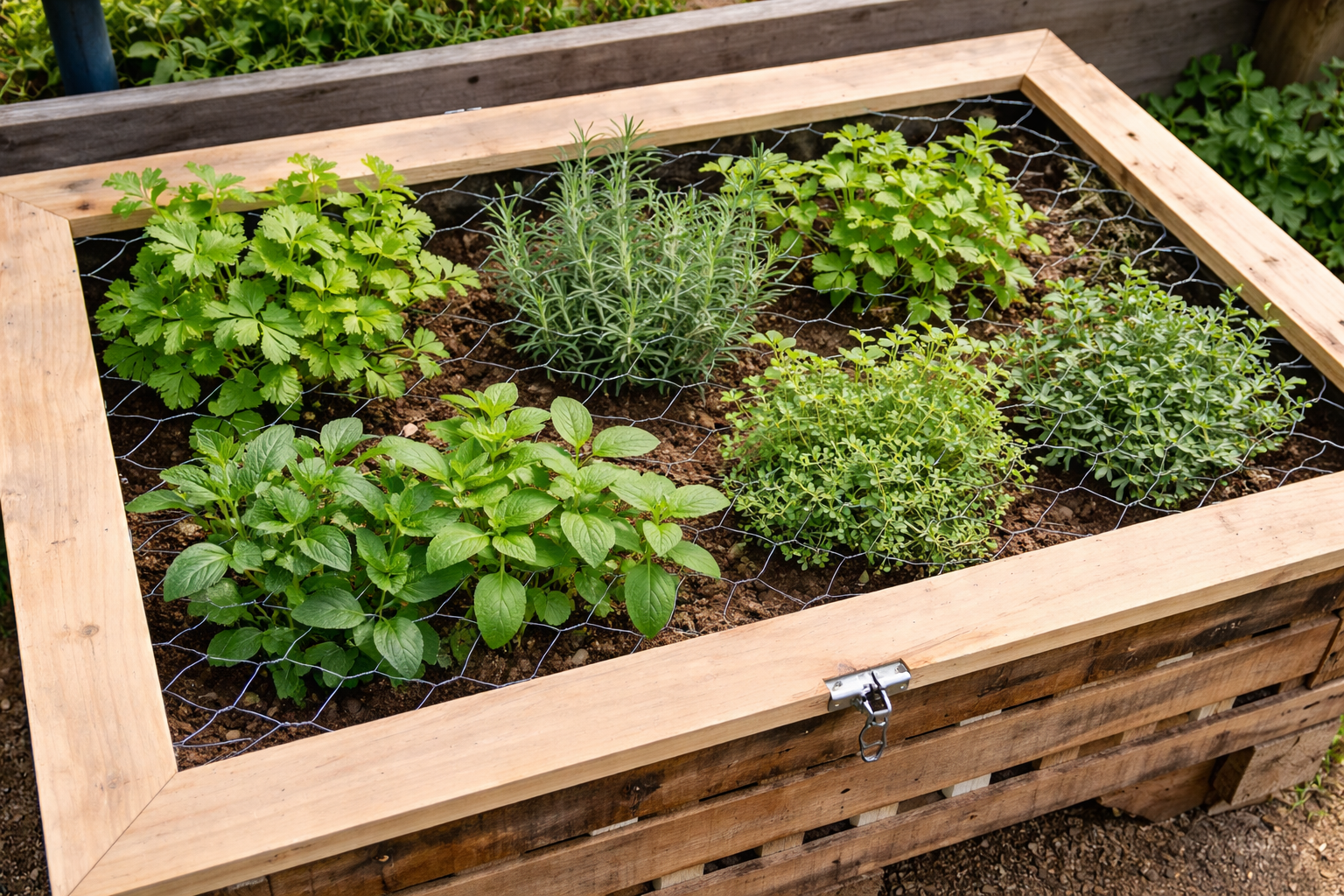
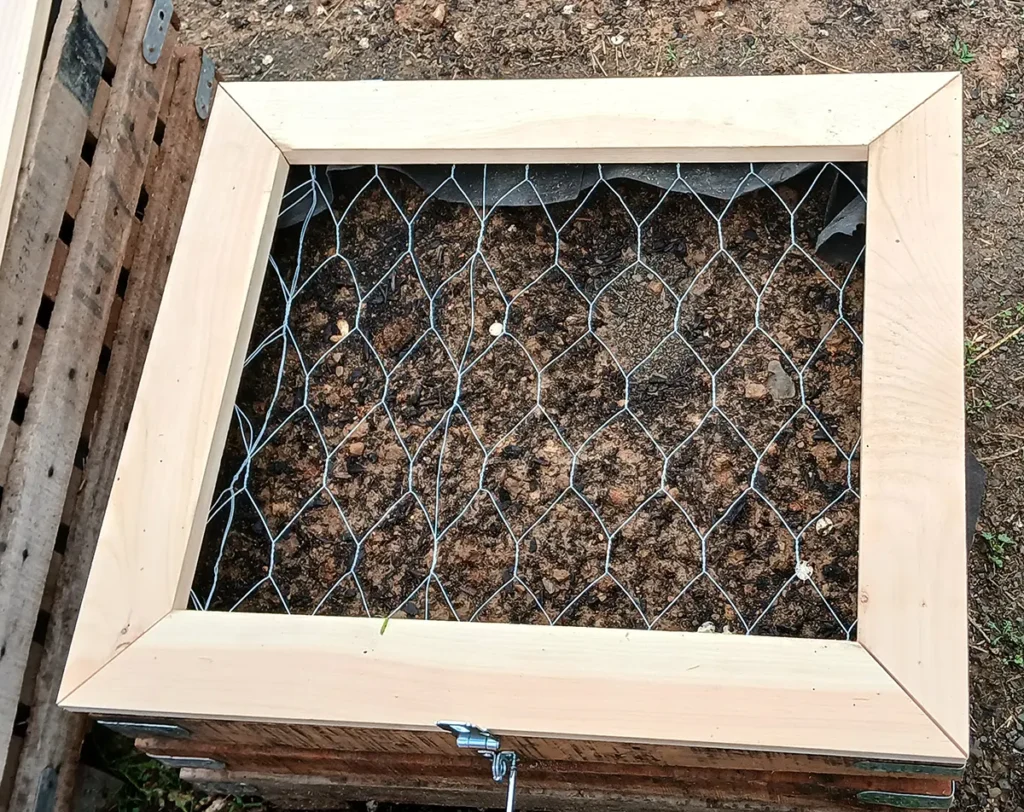
- Without a cover, many horses will simply yank plants out by the roots or eat them down faster than they can recover. A wooden frame with securely fastened wire can help protect the base of the plants while allowing growth to come through.
- Whatever cover you use, make sure there are no exposed sharp edges, loose wires, or hardware sticking out where a horse could scrape a nose, lip, or eye. And certainly, make sure there are no rope handles or other places a horse could catch a hoof!
- 7. Secure the lid or cover
- If your setup has a hinged top, make sure the hardware is solid and positioned as safely as possible. Some horses are surprisingly good at flipping, lifting, or investigating anything that seems even remotely edible.
- 8. Plant for variety
- A mix of textures, smells, and growth habits makes the garden more interesting. Taller plants can go toward the back, with lower growers in front if your planter orientation makes that useful.
The goal is not to stuff in every herb you can think of. The goal is to offer a thoughtful, safe selection and then see what your horse does with it.
Herbs and plants often considered for horses
Always double-check safety for your own horse and situation with your vet, but plants people commonly consider for horse herb gardens include:
- mint (generally peppermint, but you can experiment with some of the other mints from the mentha genus)
- rosemary
- thyme
- parsley
- sage
- chamomile
- calendula
- oregano
- lavender
- fennel
- basil
- cilantro
Some people also experiment with other horse-safe plants, but I would keep the first version simple rather than trying to grow everything at once.
What I planted
Last year, I used a mix that included celery, rosemary, thyme, mint, parsley, sage, and carrots. This year I will be planting more celery, less thyme and sage, and adding basil, oregano, cilantro, and sugar snap peas.
My horses seemed especially interested in the celery, parsley, and rosemary, though rosemary was more of a careful nibble than an all-out favorite. The thyme took a little longer to become accessible because of its low, spreading growth habit, and the carrots were one of those things I expected to become more exciting as they came up. With the new herb additions for this year, I can’t wait to see what they like best. That, to me, is part of the fun. You can build the garden with a plan, but the horses still get the final vote on what matters most to them.
The great thing about this lineup is that these plants create contrast.
If everything in the planter tastes the same, there’s no real choice.
But when you mix:
- sweet (peas)
- aromatic (mint, rosemary)
- mild (parsley)
- subtle (thyme)
…you’re actually giving your horses something closer to decision-making, not just access.
After the plants were well established, I did remove the lids and let the horses have more direct access. For the most part, they nibbled the tips and left the plants to keep growing, though the carrots didn’t stand a chance—they kept those eaten down to little nubs. Interestingly, after the first frost, their interest seemed to change. They went back and ate many of the plants right down to the ground, as if the frost had made them more appealing. Because of that, this year I’ll leave the lid on the carrots until frost, then pull them myself, rinse off the dirt, and offer them to the horses that way.
Ongoing care
A horse herb garden is not difficult once established, but it is not completely maintenance-free either.
You will probably need to water during dry stretches, thus the need to place it near a water source. You will almost certainly need to weed. I did this twice before the plants filled the container and blocked most weed seeds. I still had an occasional weed come up, but not many. Wind-blown weeds love good soil just as much as your intended plants do. Pulling weeds early is much easier than letting them take over and disturb the roots of everything else later.
In hot weather, some plants may also need shade during the harshest part of the day, depending on your climate and placement. I didn’t need to add a shade, but my planters were right against the fence by the water spigot, so they got some afternoon shade from the wide boards of the fence.
Winter and seasonal reality
In colder climates, most of these plantings are not going to carry through a hard winter in outdoor containers without a lot of effort. For most people, it makes more sense to treat the garden as a spring-through-fall enrichment project and replant as needed rather than wrestling huge containers around in an attempt to overwinter them. I wish I had land of my own (I board) so that I could plant a corner of the pasture with various herbs and block it off until they got established, and then let the horses in to graze on what they wanted, when they wanted.
In warmer climates, you may be able to keep parts of it going much longer.
The part I like best
What I like best about a horse herb garden is not that it looks pretty, though it can. It’s not even that it gives horses a few extra treats.
It’s that it offers them a little agency.
Not total agency. Not wild freedom. Not some romantic fantasy version of horse keeping. Just one honest, manageable way to say: here is something safe, and you can decide what you think of it.
For horses who live so much of life on our schedule, in our systems, under our management, I think that matters more than people sometimes realize.
And if a planter full of herbs gives them one more chance to explore, choose, and enjoy something for themselves, that feels like time and effort well spent to me.
A small update from this year
When I planted the herbs again, the horses didn’t wait to see if they were worth eating. They already knew. They pushed down on the wire lid enough to get to the plants and pulled several up overnight, before I had a chance to reinforce it.
In the morning, I replanted them and added a stiffer wire so the plants could establish, but the behavior itself made sense. In the world they came from, you don’t wait for a resource to be ready—you take it when it appears, and you remember where to find it the next time it comes back.
What I’m seeing now isn’t impatience. It’s memory, pattern recognition, and survival logic still intact.
On another note, the carrots didn’t do well in the smaller planter last year—they were kept too closely nibbled to really establish. This year, I’m trying strawberries there instead, to see if a lower-growing plant handles that kind of attention a little better. It makes sense that I’ll need to let the strawberries establish more before opening the planter to the horses, because they love strawberries. But if they destroy the plants, that’s okay too. This is about providing them a resource to enjoy, not building a garden worthy of a Great American Gardeners Award.
Final caution
Before planting anything for your horses, verify each plant with reliable sources and with your veterinary team if needed. Introduce new plants thoughtfully, use only horse-safe growing practices, and build every part of the setup with safety in mind.
A horse herb garden should be enriching, not risky.
But done thoughtfully, it can be one small, satisfying way to make a horse’s world feel a little bigger.
Part of the value of providing horses with an herb garden is simply paying attention. Horses are observant, responsive animals, and if you’ve ever wondered how much they really notice and feel, I explored that more in Do Horses Feel Empathy?
A horse herb garden may seem like a small thing, but to me it belongs to the same larger idea I wrote about in Learning to Listen Instead of Demand: making room for the horse’s preferences instead of treating every decision as ours alone.