EHV-1 Barrel Racing Outbreak: Facts, Not Fear
If your feed looks anything like mine, you have probably seen a flood of posts about the “deadly EHV outbreak” linked to recent barrel racing events in Texas and Oklahoma. Shows are cancelling, haulers are scrambling, and rumor posts (some of which were deleted when I asked for sources) are claiming everything from “every state has cases” to “over sixty percent of horses die.”
Let’s slow this down.
This post pulls from veterinary organizations and disease reporting networks such as the Equine Disease Communication Center (EDCC), the American Association of Equine Practitioners (AAEP), and state animal health officials, especially the Texas Animal Health Commission (TAHC) and Texas Department of Agriculture (TDA). (See reference section at the bottom for more info on sources used.)
This is not a substitute for veterinary advice. It is meant to give you a solid, sourced overview so you can protect your horses without feeding—or succumbing to—the panic.
What is EHV-1 and what is EHM?
Equine herpesvirus (EHV) is a family of common DNA viruses that circulate in horse populations all over the world. The two most important types for most horse owners are EHV-1 and EHV-4.
Key points:
- EHV-1 and EHV-4 most often cause a mild to moderate respiratory illness.
- EHV-1 can also cause late term abortion and, in some horses, a severe neurologic form when the virus affects blood vessels in the brain and spinal cord.
- This neurologic form is called Equine Herpesvirus Myeloencephalopathy (EHM). EHM is serious and can be fatal, but it is not always fatal. Many horses recover.
- EHV only affects equids. It does not infect humans.
What we actually know about the current outbreak
The EDCC is tracking an outbreak of EHM linked to the Women’s Professional Rodeo Association (WPRA) World Finals and Elite Barrel Race held in Waco, Texas, November 5 to 9, 2025.
As of November 20, 2025, the EDCC outbreak summary reports:
- The outbreak originated at the Waco WPRA World Finals and Elite Barrel Race event.
- Officially confirmed EHM cases tied to that event have been reported in:
- Texas
- Oklahoma
- Louisiana
- There is also at least one EHM case reported in another state that is not linked to the Waco event.
State and event responses so far include:
- The Texas Animal Health Commission confirmed neurologic EHV-1 in a Texas horse that attended the Waco event and issue specific monitoring and biosecurity recommendations for exposed horses.
- The Barrel Futurities of America World Championship event in Oklahoma has been suspended after EHM-positive horses were connected to the Waco competition.
- The San Antonio Stock Show and Rodeo cancelled its Uvalde qualifier after guidance from state officials, citing the EHV-1 outbreak and the need to prioritize equine welfare.
These numbers will change as more testing is done, but at the time of writing, this is a focused outbreak linked to specific events and travel patterns, not “every state except New Jersey.”
Is this really “sixty percent fatal”?
One rumor floating around says that over sixty percent of horses that get EHM die. Current summaries from the EDCC stress that while EHM can be severe and sometimes fatal, many horses survive and recover.
The real message from EDCC and AAEP is that EHM is serious and deserves strong management and biosecurity, but “most horses die” is not a factual statement and should not be reposted as if it came from veterinary sources.
How EHV spreads
According to EDCC and AAEP:
- EHV-1 is spread mainly through respiratory secretions, horse to horse.
- It can also spread indirectly through:
- Shared buckets, hoses, bits, grooming tools, tack, stall surfaces
- Human hands, clothing, boots, and equipment that move between horses
- The virus can survive for a period of days in the environment under normal conditions, and longer under perfect conditions, but it is easily killed by proper cleaning and common disinfectants.
This is why isolation, hygiene, and good barn routines are so powerful.
Clinical signs to watch for
From EDCC, AAEP guidelines, and state fact sheets, signs of EHV-1 and EHM can include:
Early and general signs
- Fever, often the first and sometimes only early sign
- Nasal discharge
- Coughing
- Lethargy or depression
- Enlarged lymph nodes under the jaw
Reproductive signs
- Late term abortion
- Weak or non viable foals
Neurologic (EHM) signs
- Hind limb weakness or staggering
- Incoordination or ataxia
- Loss of tail tone
- Dribbling urine or difficulty urinating
- Leaning on a wall or fence for balance
- Inability to rise
These signs are not specific to EHV and require veterinary diagnostics. If you see them, call your veterinarian immediately and do not move the horse or other horses on and off the property until you have a plan.
What to do if your horse may have been exposed
If your horse:
- Attended the Waco WPRA and Elite Barrel Race event
- Was stalled near or hauled with horses that were there
- Has been at an event where EHV is suspected
then you and your veterinarian should treat that horse as potentially exposed and take precautions. TAHC, AAEP, and EDCC recommend steps like these.
1. Isolate returning or exposed horses
- House them in a separate barn, paddock, or shed with no nose to nose contact with other horses.
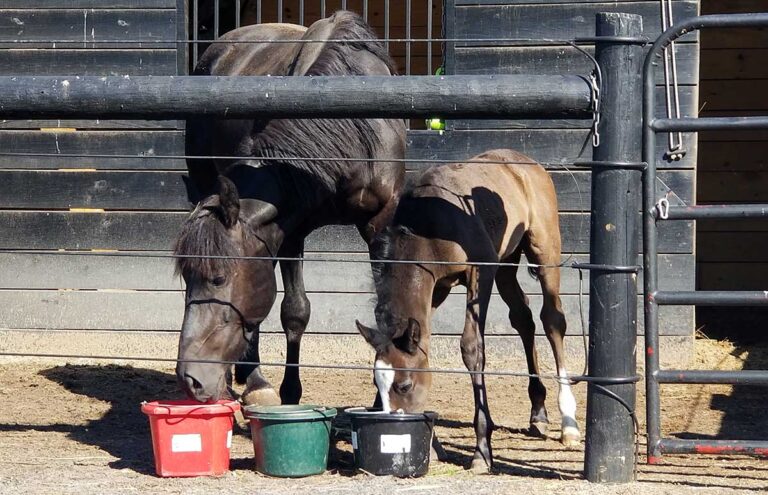
- Use separate buckets, feed tubs, mucking tools, grooming equipment, and tack.
2. Take temperatures twice a day
- Log temperatures morning and evening for at least 14 to 21 days after the last possible exposure.
- A rectal temperature above about 101.5°F is a red flag. The TAHC specifically notes 102.5°F or higher as a threshold to call your veterinarian promptly.
3. Practice strict handler hygiene
- Work with exposed horses last in your daily routine.
- Use dedicated boots and coveralls or change clothes after working with them.
- Wash hands or use hand sanitizer before you handle other horses.
4. Clean first, then disinfect
- Remove organic matter like manure, bedding, and visible dirt from stalls, buckets, and equipment.
- Then apply an appropriate disinfectant according to label directions.
- Common barn disinfectants and simple bleach solutions are effective when used on clean surfaces.
5. Work with your veterinarian and state officials
- Your vet may collect nasal swabs and blood for PCR testing.
- Follow any quarantine, testing, or reporting guidance from your state animal health office.
Isolation periods often run 21 to 28 days after the last suspected new infection, depending on test results and state rules, so this is very much a “talk with your vet” decision, not a one size answer.
Day to day biosecurity that always makes sense
You cannot control what happens in every show pen, but you can dramatically reduce your risk by tightening up everyday habits, especially when disease is in the news. The same biosecurity habits that work for EHV work for many other barn diseases too.
Simple, practical steps:
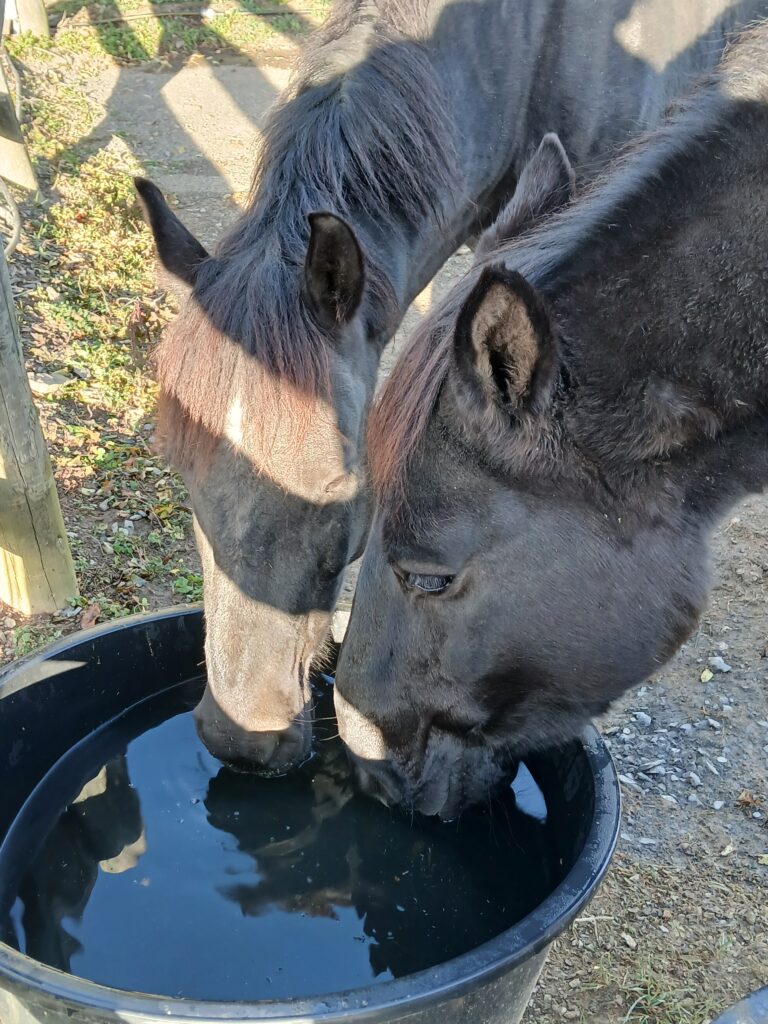
- Do not let horses share water sources at events.
- Do not share bits, nosebands, grooming tools, or feed tubs with other barns.
- Avoid letting strange horses touch noses with yours.
- Keep up with routine cleaning and disinfection of trailers and stalls between trips.
- Isolate new arrivals and horses returning from shows before they join the main herd.
There is never a zero risk situation once horses commingle, but basic biosecurity that you practice all year is the same set of tools that protects you when an outbreak hits the news.
Where do vaccines fit into this?
According to AAEP vaccination guidelines and related resources:
- EHV-1 and EHV-4 vaccines help reduce respiratory disease and abortion.
- Current vaccines do not have a label claim to prevent the neurologic form, EHM.
- Vaccination can reduce virus shedding and disease severity, and it is one tool in overall risk reduction.
- Decisions about boosters during an outbreak are risk based and should be made with your veterinarian.
So vaccines are worth discussing with your vet, but they are not magic armor. Good management and biosecurity remain essential.
For barns, haulers, and events: a quick call before you go
This outbreak is a reminder of how connected the horse world really is. Barrel races, rodeos, endurance rides, clinics, mustang events, boarding barns, training barns, and sale barns are all tied together by the same trailers and the same back gates.
If you run a barn or an event, or you haul for a living, you are part of the front line of biosecurity.
- Barns and trainers. Post clear barn rules about new arrivals, returning horses, and sick horses. Spell out what you expect for health history, temperature monitoring, and isolation when a horse comes home from a big event. Make sure your boarders know the plan before they load up.
- Haulers and mustang shipping. Good haulers are already thinking this way. If you use a shipper, ask how often they clean and disinfect, how they handle mixed loads, and what they are doing differently while EHV is active. If you work with a hauler like Gentled Hearts Stables, close to both horses and people, this is a chance to show that care in practice through strong biosecurity and honest communication.
- Endurance rides, shows, mustang gatherings, and clinics. Many organizers are updating their entry rules with health checks, temperature logs, or temporary limits on horses coming from specific locations. Some are choosing to postpone. None of this is “overreacting.” It is about giving horses a safer environment to gather in the future.
For all of us, one simple habit can make a big difference right now:
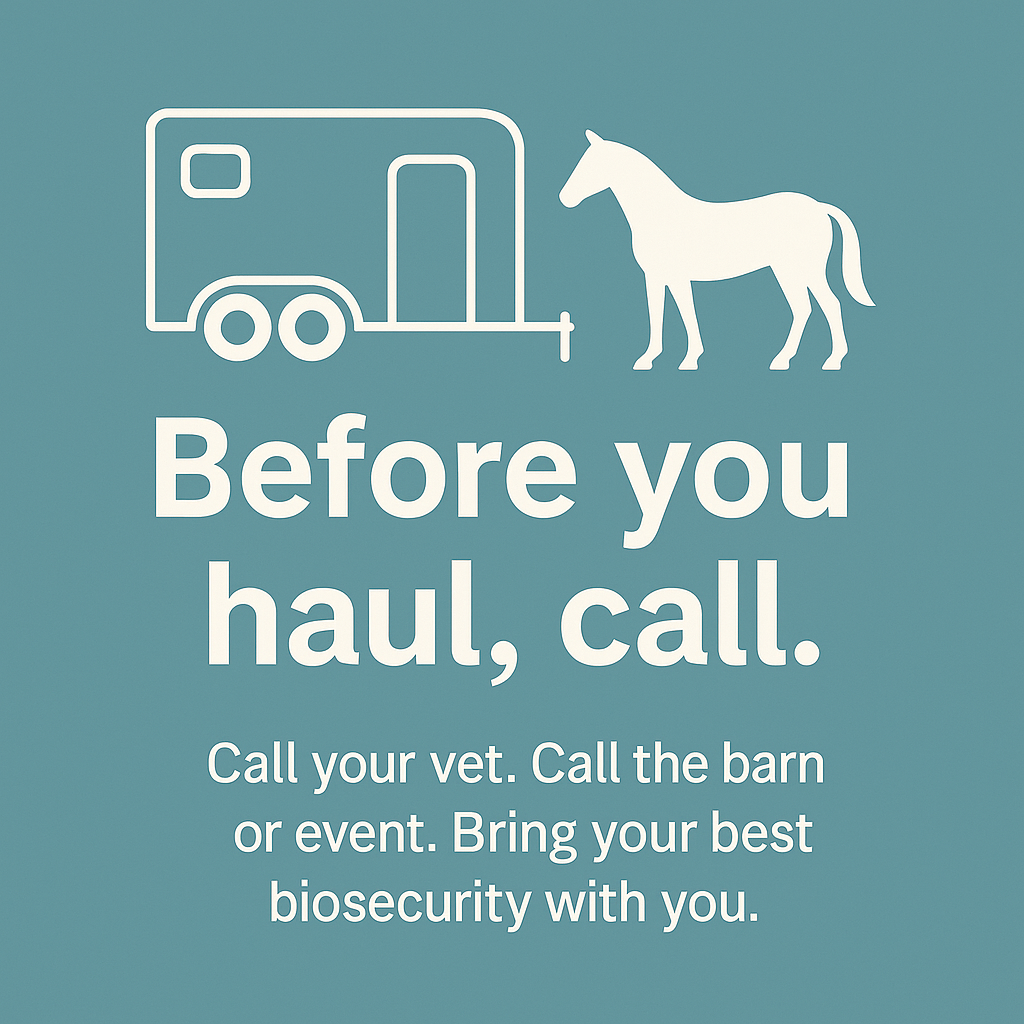
Before you haul, call
- Call your veterinarian if your horse has been at a risk event or has any sign of illness.
- Call the barn, show, clinic, or shipping company before you go and ask, “What are your current EHV rules, and do you want us to come right now?”
- If the answer is “please wait” or “we would rather you stay home,” take that as care, not rejection.
Thoughtful barns, careful haulers, and events that are willing to hit pause for a bit are not hurting the horse industry. They are buying it time.
How to share information without feeding hysteria
A few simple rules can slow the rumor mill:
- Check the source before you share.
- Does the post link to EDCC, your state vet, AAEP, or another official veterinary source?
- Or is it just a screenshot with no citations?
- Avoid dramatic, absolute language.
- Statements like “every state is infected” or “most horses die” are not supported by current data.
- Respect privacy and contact tracing.
- Let veterinarians and state officials notify exposed owners.
- Avoid naming and shaming individual horses, owners, or barns unless officials have already made that information public.
- When in doubt, ask for clarification from a credible source.
- Your regular veterinarian
- Your state animal health office
- The EDCC disease alerts and EHM resource pages
Want a quick video overview?
If you like to pair written information with video, these recent news clips give a general picture of what is happening in Texas right now:
- KSAT 12. Equine virus outbreak prompts cancellation of Uvalde rodeo qualifier, San Antonio Rodeo says. (Local news segment with event details and comments from rodeo officials.) https://www.ksat.com/news/local/2025/11/19/equine-virus-outbreak-prompts-cancellation-of-uvalde-rodeo-qualifier-san-antonio-rodeo-says/ KSAT
- KSAT 12. Veterinarian explains horse virus outbreak after San Antonio rodeo officials cancel Uvalde qualifier event. (Vet interview describing EHV-1 and the local response.) https://www.ksat.com/news/local/2025/11/20/veterinarian-explains-horse-virus-outbreak-after-san-antonio-rodeo-officials-cancel-uvalde-qualifier-event/ KSAT
These are news pieces, not detailed veterinary guides, but they can help people who prefer a short video summary.
Closing thoughts
EHM is serious. It deserves attention and real biosecurity, not eye rolling. At the same time, horses and humans do not benefit from panic posts that exaggerate the risk and drown out the people doing the actual work of tracing, testing, and treating.
We can hold both truths. This outbreak is a big deal for the horses and communities directly involved, and it is also a situation where smart, local, science based decisions will do far more good than blanket fear.
If your horse might have been exposed, call your veterinarian and follow their guidance. If your horse is not connected to the affected events, use this as a nudge to tighten up your biosecurity and bookmark the EDCC and AAEP pages so you are getting updates from the people whose job it is to track equine disease.
Our horses are counting on us to keep our heads clear when the group chats are not.
References
American Association of Equine Practitioners. (2021). Equine herpesvirus (EHV-1 and EHV-4) infectious disease guidelines. AAEP. https://aaep.org/resource/aaep-infectious-disease-guidelines-equine-herpesvirus-1-4/ AAEP+1
American Association of Equine Practitioners. (2024). FAQ: Regarding equine herpesvirus (EHV). AAEP. https://aaep.org/wp-content/uploads/2024/03/EHV_FAQ_for_Owners_Final.pdf AAEP+1
American Association of Equine Practitioners. (2024, April 19). Equine herpesvirus (rhinopneumonitis) vaccination guidelines. AAEP. https://aaep.org/resource/equine-herpesvirus-rhinopneumonitis-vaccination-guidelines/ AAEP
Equine Disease Communication Center. (2025). Equine herpesvirus. EDCC. https://www.equinediseasecc.org/equine-herpesvirus Equine Disease Communication Center
Equine Disease Communication Center. (2025). Equine herpesvirus myeloencephalopathy (EHM) [Disease fact sheet]. EDCC. https://equinediseasecc.org/handler/managedfilehandler.ashx?ext=pdf&id=71 Equine Disease Communication Center
Equine Disease Communication Center. (2025). Equine herpesvirus myeloencephalopathy (EHM) outbreak. EDCC. https://equinediseasecc.org/news/article/Equine-Herpesvirus-Myeloencephalopathy-%28EHM%29-Outbreak Equine Disease Communication Center
Texas Animal Health Commission. (2025, November 19). Neurologic form of equine herpes virus confirmed following event in Waco. TAHC. https://www.tahc.texas.gov/news/2025/2025-11-19_EHM-Waco.pdf Texas Animal Health Commission
Texas Department of Agriculture. (2025, November 19). Commissioner Miller alerts Texas equine industry of EHV-1 outbreak. Texas Department of Agriculture. https://texasagriculture.gov/News-Events/Article/10631/Commissioner-Miller-Alerts-Texas-Equine-Industry-of-EHV-1-Outbreak Texas Agriculture+1