Horse Rules: 17 Horse-Centered Rules for Trust and Respect
There are plenty of ways to own horses. Some people come to them through sport. Some through work. Some through childhood dreams that never really went away. Some because life simply feels better with hay on their clothes, hoofbeats in the background, and a horse looking over the gate when they arrive. Most people don’t have written horse rules that they live by.
But the longer I live with horses, the more I think ownership ought to come with a kind of code. Not a rigid one. Not a one-size-fits-all list of commandments. Just a quieter set of rules built from paying attention, making mistakes, and learning — sometimes the hard way — that horses are not here to serve every human whim just because we bought the hay and pay the bills.
They are in our care, yes, but in some ways we are in theirs, too. What we put into the relationship shapes what comes back out of it, and sometimes whether a real relationship exists at all. Trust, softness, willingness, and connection don’t appear out of nowhere. They grow, or they don’t, according to what we build.
That matters to me. It matters in everyday care. It matters in training. It matters in the quiet moments that never make it into photos or videos. And it matters just as much in the moments when a horse is trying to tell us something we don’t especially want to hear. That idea shows up again and again in the stories I’ve shared here before, including Mustang Protective Behavior and Spooky Horses.
So, for whatever they’re worth, here are my horse rules.
Horse Ownership Rules
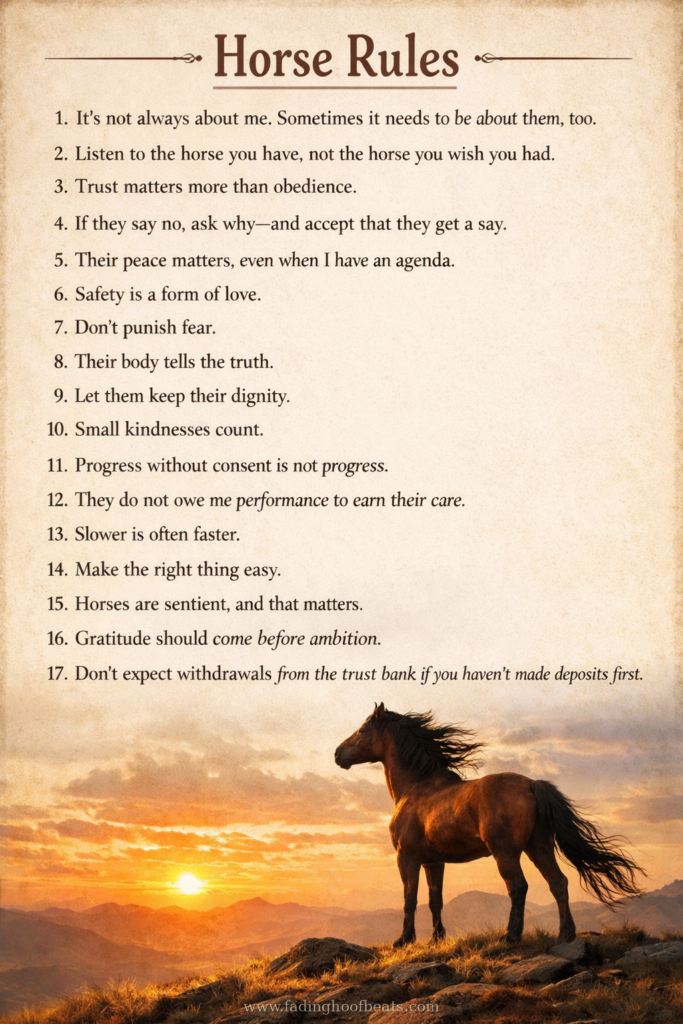
- Rule 1: It’s not always about me. Sometimes it needs to be about them, too.
- Rule 2: Listen to the horse you have, not the horse you wish you had.
- Rule 3: Trust matters more than obedience, and it will take you much further.
- Rule 4: If they say no, ask why — and accept that they get a say.
- Rule 5: Their peace matters, even when I have an agenda.
- Rule 6: Safety is a form of love.
- Rule 7: Don’t punish fear.
- Rule 8: Their body tells the truth.
- Rule 9: Let them keep their dignity.
- Rule 10: Small kindnesses count.
- Rule 11: Progress without consent is not progress.
- Rule 12: They do not owe me performance to earn their care.
- Rule 13: Slower is often faster.
- Rule 14: Make the right thing easy.
- Rule 15: Horses are sentient, and that matters.
- Rule 16: Gratitude should come before ambition.
- Rule 17: Don’t expect withdrawals from the trust bank if you haven’t made deposits first.
What I Mean by That
Some of these probably don’t need much explanation. If you live with horses long enough, they explain them for you.
They teach you that fear is not rebellion, and that tension is not something to dismiss just because it is inconvenient. They teach you that hesitation means something. They teach you that what looks like resistance to a human eye may actually be confusion, pain, uncertainty, or a perfectly reasonable objection. Horses often answer quietly before they ever answer loudly, and I think one of our jobs is to learn how to hear them while they are still using their inside voice.
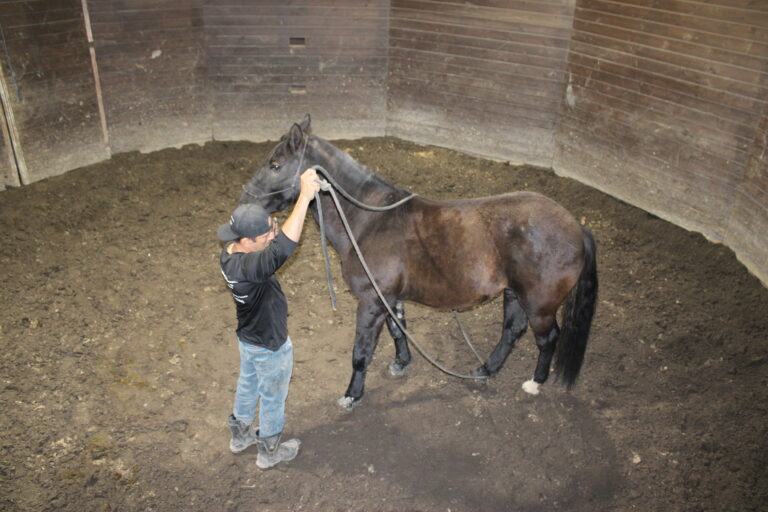
Floki makes that point especially clearly for me. He says no softly first. If I miss it and keep pushing through, he escalates — not into ugliness and not into a real threat, but into something bigger so I will finally hear him. He does that levade-like move of his, lifting and making himself impossible to ignore. Even then, he does it politely. He turns slightly away rather than aiming into me, as if he is trying to make his point without turning it into an attack. Read more about how that works here: Building Trust.
To me, that says a lot. It says he is not trying to dominate me. He is trying to be heard. And it reminds me that when a horse has to shout, we should probably ask ourselves how many quieter answers we already missed.
That is part of why Rule 4 matters so much to me. If they say no, ask why — and accept that they get a say. Not because the horse gets to run the whole relationship, but because listening is part of having one.
The same is true of trust. People sometimes talk as if trust should come automatically once a horse is fed, sheltered, and basically well-managed. Those things matter deeply, of course. They are baseline responsibilities, not optional extras. Good feed, clean water, safe fencing, proper hoof care, medical care, and thoughtful handling are part of the promise we make when a horse comes into our keeping. The welfare side of that is not sentimental; it is foundational. AAEP Principles of Equine Welfare
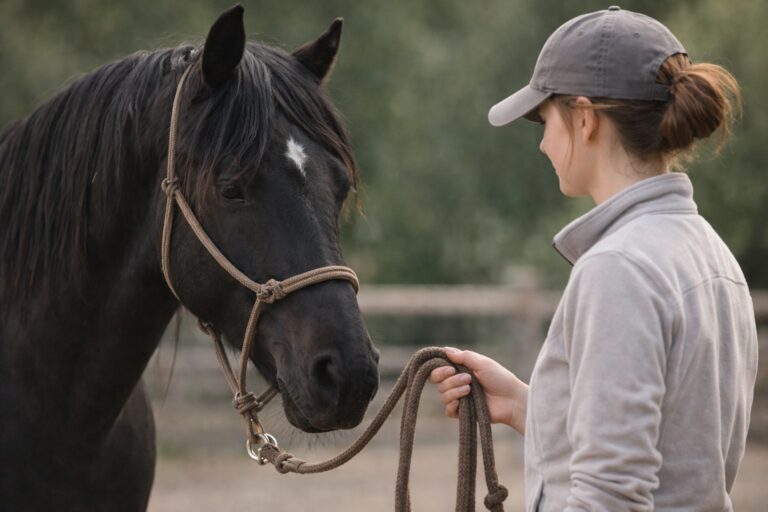
But baseline care is not the whole relationship. Real trust is usually built in smaller, quieter moments: when you notice tension before it turns into explosion, when you back off instead of overpowering, when you keep your word, when you let them graze, when you make life with you feel safer instead of harder. [INTERNAL LINK: grazing / quiet time / relationship-building post] Those are deposits. So are patience, fairness, consistency, and allowing the horse to have thoughts, feelings, preferences, and opinions without punishing them for having them.
That is why the trust-bank rule belongs on this list. A lot of people want the withdrawal without the deposit. They want the horse to load, stand, soften, try, forgive, trust, and stay steady in hard moments, but they haven’t spent much time putting anything into that account except demands. You can force compliance, at least for a while. People do it every day. But compliance is not the same thing as trust, and obedience is not the same thing as partnership.
If what you want is something real, you have to build it honestly. That also means paying attention when the horse’s body is telling the truth before a bigger problem develops. Changes in posture, facial expression, tension, movement, or willingness can all be part of that conversation, because horses communicate discomfort and pain through body language long before many people recognize it.
Why This Matters So Much to Me
Maybe this sounds too soft to some people. I don’t think it is. If anything, I think it is harder. It is easier to demand than to listen. Easier to overpower than to wonder why. Easier to chase visible results than to build invisible foundations. Easier to label a horse stubborn than to admit we may be asking badly, moving too fast, or expecting the horse to carry more than it should.
But honoring the horse, to me, means recognizing that they are not just bodies to direct. They are minds, nervous systems, memories, instincts, preferences, and lived experience. They can learn to dread us, tolerate us, enjoy us, or trust us. We help shape which one it will be.
And because we hold so much power in that relationship, I think we owe them some rules of our own. Not rules about winning. Rules about deserving them.
That belief runs through so much of what I write here, whether I’m talking about [Mustang Protective Behavior], [Floki post about listening/soft no’s], [Lagertha trust story], or the slower work of building partnership one small moment at a time.
Final Thought
I don’t always get this right. No one does. But these are the principles I come back to when I want to remember what matters most: not just what I can get a horse to do, but what kind of human I am being while I ask it. Because in the end, I don’t just want horses who comply. I want horses who feel safe, respected, and well-kept in my hands.
And I think that starts here, with remembering that it isn’t always about me. Sometimes it needs to be about them, too.
What horse rules would you add?
I know this isn’t a complete list. If you have a horse rule you live by that isn’t included here, I’d love to hear it.
What would you add?