The First Hour in Camp: Riding In, Settling Down
Most of our camps will not start with a truck door slamming and a trailer ramp dropping. They will start with the sound of hooves. The first hour in camp is critical for the horses.
The last mile into camp is usually quiet. The horses are tired. I am tired. Packs creak. The light slants low. Somewhere ahead there is a place to stop. Maybe it is a formal campground. Maybe it is a flat piece of ground near water and a fence line. Either way, the first hour after we ride in will shape how Floki and Lagertha feel about the whole day.
If you are new here and want to know more about our long ride and why we travel this way, you can read our Start Here page
This is what that first hour in horse camp looks like for us, and why we try to do things in the same order every time.
Step 1: Slow the last mile
If I can help it, we do not trot into camp. The horses walk and I lead. This gives them a chance to begin relaxing and cooling down if they have had a tough day. If terrain allows and I can safely do so, I will loosen the girths a notch.
That last mile is where the horses start to read everything. New smells. New sounds. Dogs. People. Wind in a different kind of tree. If I rush them in, they do not have time to sort all of that out.
So we walk.
I breathe on purpose. I loosen my shoulders. I talk to Floki and Lagertha. The message is simple. The hard part of the day is over. We are going to stop. It is safe to look around now.
When I can, I let them see camp from a little distance. A minute to stand and look can save ten minutes of snort and spin later.
Step 2: Pick the safest spot, not the prettiest one
It is tempting to pick the place with the best view for our first stop. On a long ride, I try to pick the place with the best footing and the easiest exits instead.
When we arrive, I look for:
- Ground that is not slippery or full of hidden holes
- Some kind of wind break if possible
- Enough room that the horses are not squeezed between scary objects
- A clear path in and out, in case we need to move in a hurry
If we are in a campground, that might be a bare patch near the trailer parking or a corner near the stock water. If we are out on public land, it might be a flat spot near a fence or rock outcrop. Sometimes I have the luxury of a pre-selected spot, where my husband, acting as support driver, has already set up camp with the trailer. Usually, I have to make the decisions.
Only when I have a good place in mind do I ask them to stand.
Step 3: Stop, breathe, loosen, look
The first five minutes set the tone.
I ask them to halt where I want the center of camp to be. I stand for a moment and let everybody take a breath. Then:
- I loosen the cinches another hole or two. I do not want to pull the saddles and packs straight away, as that can cause their backs to be chilled and cramp.
- I pull the breast collar free if they are wearing one.
- I change their bosals for halters and lead ropes.
I do not slam off the saddle and start yanking gear. I want them to feel that camp is a place where we slow down, not a place where everything gets chaotic.
While we stand, I look around with their eyes. Flapping tarps. Loose dogs. Children. Trash. Wind in the grass. Whatever is there, I acknowledge it. I might tell them out loud what I see. It helps me relax too.
Step 4: Water before anything fancy
The next priority is water.
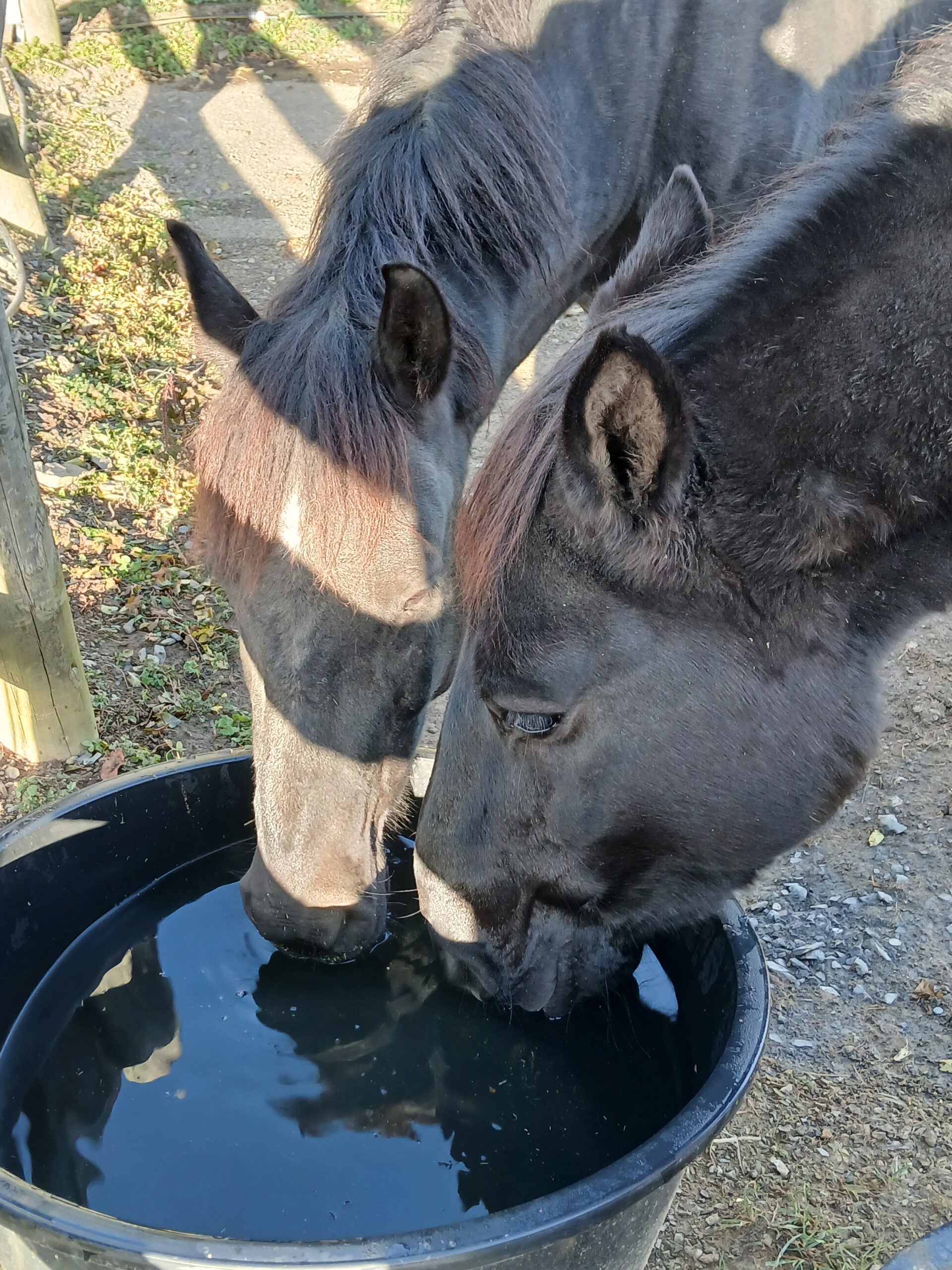
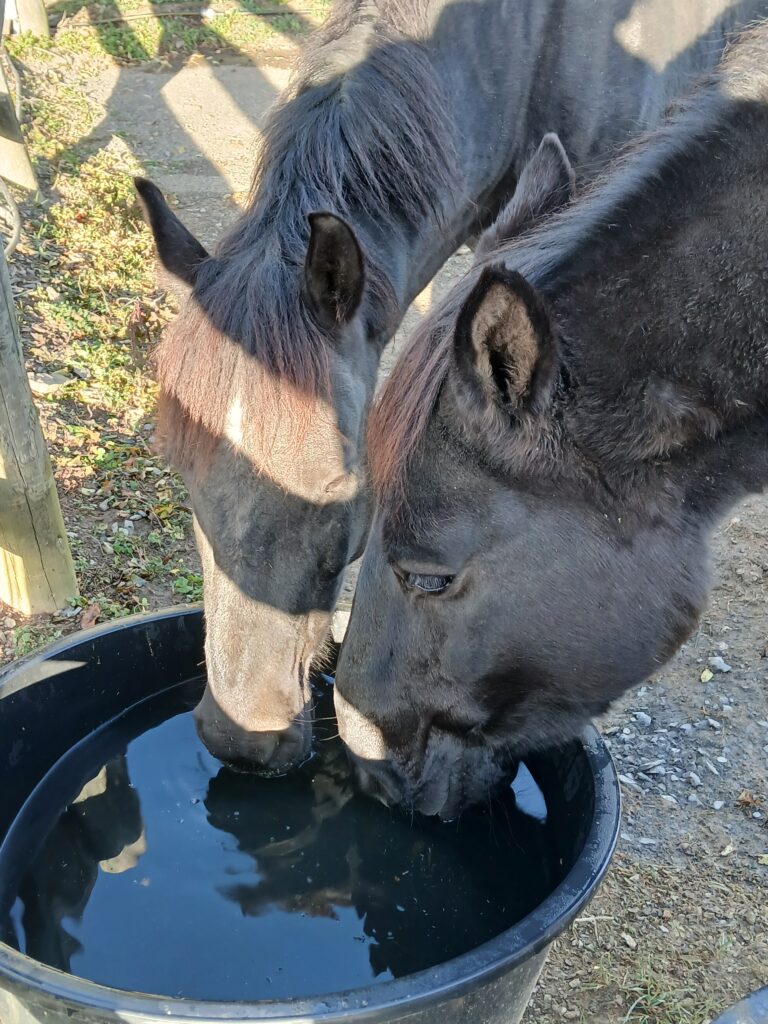
If there is a safe water source close by, we walk down together. I do not force them to drink, but I give them time. Floki often wants to splash and think about life. Lagertha is more likely to drink and then stand and listen. I let them be themselves as long as they are polite and not dragging me through someone else’s camp.
If I need to haul water in a tub or buckets, that becomes job one. Tack stays loosened but on until I have at least one good drink ready for them. On a hot day this might mean several trips with the bucket before I do anything else.
Only when I know they have had a good drink do I move on.
Step 5: Boundaries and anchors
Next, I set the boundary that will hold them for the evening.
Every team has their own system. Highline. Paddock panels. Picket line. Temporary electric. What matters most to me is that it is consistent and fair.
While they wait in hand or tied to a solid object, I check:
- Are there sharp edges or broken boards where I plan to tie or fence?
- Is there anything they could get a hoof under or over?
- If I am using temporary fence, is the ground good for posts and is the charger working?
Then I put them where they will spend the night, give them a moment to explore that space, and watch until their body language drops a notch. I want to see a sigh, an ear soften, a yawn, or a stretch. Some sign that their nervous system is starting to let go.
Only when I see that do I start taking tack off and then allow them to roll and scratch backs that are itchy from dried sweat.
Step 6: Untacking as a health check
Untacking is not just about comfort. It is our first full-body health check after the miles.
I take tack off in the same order every time so I do not forget anything when I am tired.
For example:
- Bridle off, halter on, quick rub on the forehead.
- Saddle bags off and set in their place.
- Saddle off.
- Saddle pad off and checked for wet spots or hair patterns that look odd. If the back is still very hot and sweaty and the day is cool, I may leave the saddle pad on loosely with dried grass, straw, or hay stuffed between back and pad to help absorb sweat. This can help prevent severe cramping for the horse.
- Then a slow hand along the legs and body.
As I go, I look for:
- New rubs or swelling
- Unusual heat or cold spots along the back
- Stone bruises or tenderness when I pick up each foot
- Any change in attitude that might signal pain
If something feels off, this is the moment to catch it. Better to spend ten extra minutes here than ten days healing a preventable sore.
Once they are free of tack, they get another chance to drink and then some hay or forage where they can eat without needing to guard it.
Step 7: Secure the horses, then care for the human
Once Floki and Lagertha are watered, settled in their pen or on their highline, and have something to eat, I shift my focus to the other living creature in camp: me.
The rule is simple. Horses first, then human. But the human still matters.
In that first hour I try to:
- Set up camp—tent, sleeping bag, cooking equipment.
- After all is ready and dinner is done, check all tack for safety and clean so it’s ready for morning.
- Make camp safe, especially from bears—move all food and cooking equipment far from camp and tie high.
- Drink water, maybe a cup of tea (others might prefer coffee).
- Change out of damp or sweaty clothes so I do not get chilled.
- Eat something with real calories, not just a snack out of habit.
- Take a moment to sit and breathe, even if only for five minutes.
If I skip this part, I am the one who gets short-tempered or clumsy later, and that is not fair to the horses. A tired, hungry human makes poor decisions.
Step 8: Quick walk of camp
Before full dark, I like to walk the edges.
I check:
- The route we will use to leave camp in the morning
- Any holes, trash, or hazards near the horses
- Where the nearest water is and how the footing looks there in low light
- Where I will put things like the stove, the food tote, and the saddles
This does not have to be a long inspection. It is simply a way to teach my brain and body, and the horses, that camp is known ground. Unknown is scary. Known is manageable. The more we know, the more relaxed everyone becomes.
Step 9: A few minutes for connection
When the must-do jobs are done and the light is thinning, I like to spend a few minutes doing nothing useful at all.
I stand with Floki and Lagertha while they eat. I scratch a favorite spot. I listen to their chewing. I watch the way their ears move when a new sound comes in. I let my own breathing match theirs.
On paper, this does not sound important. In real life, this is where the miles knit together. This is where they learn that I am not just the person who rides and manages and ties knots. I am the person who stands still and keeps them company when they are tired.
That is a lesson I will need later when we are riding for thousands of miles and dozens of weeks.
Our First Hour in Camp Checklist
At the end of a long day, my brain is not always sharp. So I keep a simple mental checklist.
You are welcome to borrow it and adapt it to your own horses.
Our First Hour in Horse Camp Checklist
- Walk the last mile. Let everyone look and breathe.
- Choose the safest spot, not the prettiest one.
- Halt, loosen cinch, breathe together, and scan for noise and motion.
- Water first. Give them time to drink and settle.
- Set clear boundaries. Highline, pen, or tie in a safe, known way.
- Untack in a set order and use it as a full-body health check.
- Secure horses with hay or forage where they can eat in peace.
- Take care of the human. Water, food, clean, breathe.
- Walk the edges of camp before dark. Secure food and equipment against predators.
- Spend a few quiet minutes simply being with the horses.
It is not fancy. It is not dramatic. It is just the same small steps, repeated over and over, that tell two mustangs from wild country, “You are safe with me. Today is done. You can rest.”
Want to Know More?
If you want to dig deeper into long distance equestrian travel, one of the best resources I have found is The Horse Travel Handbook by CuChullaine O’Reilly, founder of The Long Riders’ Guild. It is a practical field guide that covers everything from planning routes to daily horse care on the road.