
When Mustang Advocacy Hurts the Horse
Mustang advocacy matters. Without it, many of America’s wild horses would have little meaningful protection from poor management, competing interests, inadequate planning, and a holding system already responsible for tens of thousands of horses. Advocates have exposed problems, challenged questionable decisions, demanded public accountability, and kept horses from quietly disappearing while few people were watching.
But calling something advocacy doesn’t automatically make it good for the horse. Sometimes we become so focused on stopping a gather that stopping it begins to feel like the victory. A lawsuit is filed, a judge issues a restraining order, the helicopters remain grounded, and social media fills with words such as saved, protected, and free.
Before we celebrate, though, shouldn’t we ask what the victory has actually won for the horses?
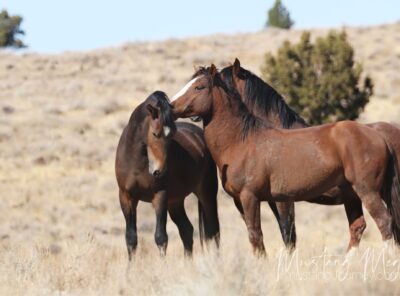
That question is especially urgent at Oregon’s Riddle Mountain Herd Management Area. Riddle Mountain is one of Oregon’s distinctive wild-horse areas, with a history closely connected to the better-known Kiger herd. I’ve written more about both herds in my guide to Oregon’s wild horses.
In August, the Bald Mountain Fire swept through an area already suffering from drought. According to the Bureau of Land Management, the fire burned approximately 70 percent of the Herd Management Area and destroyed about two-thirds of the horses’ available forage. According to the BLM’s emergency gather plan for Riddle Mountain, the operation was intended to remove the horses from severe food and water shortages and take them to off-range facilities for feed, water, care, and veterinary evaluation.
The proposal carried serious consequences. American Wild Horse Conservation’s account of the proposed roundup emphasizes that the complete removal would separate family bands and place hundreds of horses into federal holding, while calling for a genetically viable population to be returned to the range. An entire herd would be removed. Family bands would be broken apart. Horses that had spent their lives on the range would be driven by helicopter, confined in pens, and introduced into the federal holding and adoption system. The BLM said that some of the horses might eventually be offered for adoption, raising legitimate questions about how many horses, if any, would ultimately be returned to Riddle Mountain.
Those aren’t imaginary concerns. They shouldn’t be dismissed simply because the BLM used the word rescue. But neither should the condition of the land be dismissed simply because opponents of the gather used the word victory.
A temporary restraining order stopped the operation before it began. That order may mean important legal questions deserve closer examination. It may reveal problems with the BLM’s process, its emergency justification, or its plans for the herd’s future. Stopping an agency long enough for a court to examine those questions can be a legitimate and necessary function of advocacy.
A temporary restraining order, however, doesn’t restore burned forage. It doesn’t refill a shrinking water source. It doesn’t feed a nursing mare, rebuild winter reserves on an aging stallion, or help a foal survive if autumn turns harsh before the range recovers.
The BLM has warned that delaying the gather may push it into late fall, when storms could make roads in the area impassable. The agency has also said cattle will not graze the affected land while it recovers. Those claims deserve the same careful examination as the claims made by the organizations opposing the gather. The BLM isn’t infallible, but neither is it reasonable to assume that everything the agency reports about the horses or the range must be false simply because it supports a gather.
This is where advocacy becomes harder than sharing a photograph and choosing a side. There are important questions to ask about the proposed operation. Why must every horse be removed? What independent evidence confirms the present condition of the horses, water sources, and remaining forage? Could the most vulnerable horses be removed while others remain?
If the land truly cannot support any horses during its recovery, how many will eventually be returned, when will they be returned, and what binding commitment will ensure that it happens? How will the herd’s genetic viability be protected? Why was the situation allowed to reach the point where the apparent choices became complete removal or leaving hundreds of horses on badly burned ground? Those questions should be asked loudly and persistently.
But advocates must also be willing to answer difficult questions about the course of action they support. If the gather remains blocked, who will inspect the horses in person and document their condition? Who will monitor the surviving forage and water sources? What specific emergency plan will replace the one that was stopped? At what point would intervention become acceptable? How thin must the horses become? How many must weaken or die before removing them is considered less harmful than leaving them free?
“Leave them wild” is a principle. By itself, it isn’t an emergency management plan. Freedom matters enormously to a wild horse. So do family, familiar territory, and the ability to live according to instincts shaped by generations on the range. Removing wild horses from all of that causes real harm, even when no bones are broken and no deaths appear in the gather report. But freedom without enough food or water isn’t humane merely because it occurs on open land.

This is the part of advocacy we don’t discuss often enough: every available choice may cost the horse something. A helicopter gather can cost fear, injury, family, freedom, and sometimes life. Delaying a gather on drought-stricken, fire-damaged land may cost hunger, dehydration, suffering, and life. Pretending that only the other side’s choice carries a cost doesn’t make our own choice harmless.
Managing wild horses sometimes requires human intervention. I may not like every decision made by the agencies responsible for them, but I don’t believe those agencies are automatically the enemy. The general principle of maintaining sustainable herds is also part of the reason horses such as my own Tiger and Raven, who came through the United States Forest Service rather than the BLM, have been given opportunities beyond the range. Their home territory and the management decisions that shaped their lives are part of the larger history of the Devil’s Garden mustangs.
The system doesn’t always work as it should. That doesn’t mean every person working within it is acting against the horses, or that every gather is driven by cruelty or greed. Sometimes people are faced with a damaged range, too many animals for the resources that remain, worsening weather, and no available choice that causes no harm.
Good advocacy requires more than deciding in advance which side must be right. It requires looking carefully at the horses, the land, the proposed action, and the likely consequences of both acting and refusing to act.
We can question the complete removal of the Riddle Mountain herd while acknowledging that the horses may need immediate help. We can be concerned about the risks of a helicopter gather while also recognizing the practical difficulty of reaching hundreds of wild horses across thousands of acres before weather closes the roads. We can demand a clear plan for returning a genetically viable herd without insisting that every horse remain on land that may no longer be able to sustain every horse currently there. We can also refuse to call a court order a victory until we know what it means for the animals whose lives are being argued over.
Advocacy should never be measured only by whether we stopped an agency, won a lawsuit, attracted attention, or remained loyal to a particular side. It should be measured by what happens to the horse. That means knowing the issues, including the parts that complicate our preferred position. It means questioning government agencies without automatically assuming bad intentions. It means questioning advocacy organizations without accusing them of not caring. It means examining not only the harm caused by action, but also the harm that may be caused by delay.
Advocacy stops serving the horse when allegiance to a position becomes more important than honestly assessing what the horse needs.
The agency officials will issue their statements. The attorneys will file their motions. Advocates on both sides will post their celebrations and condemnations online. But when any of them get it wrong, they aren’t the ones who will go hungry, lose their freedom, or pay with their lives.
The horse will.

I have had some concerns about the forage, difficult since I am not familiar with the area..to say..but I know here in Nevada there are situations/areas where its better for the horses to be removed. No one should agree to keep horses in a area where they would face dehydration or starvation. As a advocate you have to love the horse above all things.
Monica, thank you. “You have to love the horse above all things” says it beautifully. Loving wild horses means protecting their freedom whenever the land can sustain them, but it also means being willing to consider intervention when leaving them would expose them to dehydration, starvation, or preventable suffering.
That doesn’t mean every proposed gather is necessary or justified. It means each situation has to be evaluated honestly, using reliable information about the horses, water, forage, and condition of the range, rather than beginning with an absolute answer. The horse has to matter more than our preferred position.
Thank you for this.
Between the insane “Leave them alone” crowd to crazy “We Have to trust the BLM” group, it seems like no one is looking for a third way. Unfortunately the BLM has put themselves in a position where it is hard to believe in them. The ONLY thing we have heard from them is “We’ve got to do it now!”, and they have not offered any alternatives to wiping out the whole of the Riddle HMA. Unfortunately, the BLM on the whole has a really big black eye right now. Not necessarily because of anything Burns has done, but…it’s hard to take them just at their word…sigh…
Big question for you…Does anyone know what is in the suit, OR the TRO.?? The BLM sure isn’t saying, but a judge doesn’t just issue a TRO OR agree to even hear the case just because someone yells Stop!!
pps. You mentioned having a pair of Devil’s Gardens horses, I have a BLM branded one from the 2018(?) gather. IF I’m remembering correctly that was done in part because of a wildfire, and because the USF hadn’t had a gather in many, many years. All I remember for certain is that the USF couldn’t begin to handle the number of horses they needed to pull, that’s why the BLM stepped in… BUT, they came nowhere close to removing ALL the DG horses…so.. (and when it comes to landscape & availability of forage…Modoc can definitely say “Hold my halter!” to the Oregon horses…
Ruth, thank you for this thoughtful comment. I agree that distrust can be earned without every statement from every BLM office automatically being false. That is part of what makes this situation so difficult. A proposed emergency removal of the entire Riddle Mountain herd deserves especially careful scrutiny, including serious consideration of alternatives and a clear explanation of why lesser measures would not work.
I have been trying to locate the actual complaint and TRO, but so far I have found only summaries and statements from the parties. You’re right that a judge doesn’t issue a TRO merely because someone objects. At the same time, a TRO preserves the status quo while the court considers the dispute; it is not yet a final ruling that every allegation in the lawsuit is correct. The actual order should tell us what evidence and legal arguments persuaded the judge that temporary intervention was warranted. Until we can read it, we’re missing an important part of the picture.
And yes, my two are Forest Service horses from the Devil’s Garden/McGavin Peak area. The Devil’s Garden history is an important comparison because the Forest Service needed BLM’s assistance with the number of horses being gathered and placed, but the gather did not eliminate the herd from the territory. That is quite different from proposing to remove every horse from Riddle Mountain, even if officials intend the removal to be temporary while the range recovers.
I would very much like to know whether BLM considered partial removal, temporary relocation followed by return, bait trapping, emergency supplementation, or some combination of those measures, and why each was accepted or rejected. The complaint and TRO may answer at least some of those questions. If you locate either document, please send me the link, and I’ll do the same if I find them.
Sorry to come back and leave another comment, but you did stop commenting on the fb post, so…
You said on FB that AWHC had given their reasons for the suit, and the TRO. No, that page is just a placeholder for the gather…I can see no mention of the why for the suit…
Also, I’m pretty certain the numbers you* used for how much hay a horse eats a day (*so you/the BLM/ whoever) You do realize Twenty pounds is a 1/4 of a bale… Not realistic. My 5 go thru a bale in a day and a half, and I definitely over feed them, (8 flakes at each feeding; only my DG is chunky, but she IS a DG, so go figure…☺) They are so lazy at this point they mostly only eat the grain out of the forage… I could cut them back easily to 5-6 flakes a feeding, and they’d still be quite fine.
So, 125 divide by 5 = 25 divided by 3 (feedings) = 8.3 lbs a day. So, 125lb bales divided by 9 flakes = 13.8 “servings”. Using 14 “servings” x 400 horses = 5,555 lbs divided by 2,000 lbs = 2.777 tons a day. (and I “rounded up” ALL of my numbers…so…
Yeah, a lot of hay, if you used to feeding just a couple horses. BUT that’s less than 2 – 102″ x 20′ trailers. (that size trailer can hold 2 ton of the round bales @ 500lbs each) Burns has the trailers , AND the hay…
So, you take 4 trailers up into Riddle once a week…
Ruth, please don’t apologize for commenting again. This is exactly the kind of detailed discussion I hoped the article would encourage.
First, you’re right about the AWHC page. It discusses and opposes the proposed gather, but it does not provide the actual complaint, TRO, or a detailed explanation of the court’s reasoning. I should not have described it as though it did. I’m still looking for the court documents themselves.
On the hay calculation, though, I think you divided one time too many. If five horses consume a 125-pound bale in a day and a half, that works out to:
125 pounds ÷ 5 horses = 25 pounds per horse per bale
25 pounds ÷ 1.5 days = approximately 16.7 pounds per horse per day
Dividing again by the number of feedings would calculate the amount at each feeding, not reduce the total each horse consumes during the day.
This is also why I prefer to calculate hay by weight rather than by bales or flakes. A “bale” is not a standard unit. My alfalfa bales weigh approximately 100 pounds, my round bales approximately 800 pounds, and the barn owner buys small square bales weighing closer to 40 pounds. Flake sizes vary enormously too. Twenty pounds might be one-quarter of an 80-pound bale, but it is less than one-sixth of a 125-pound bale.
The kind and quality of hay matter as well. Grass versus alfalfa, plant maturity, cutting, growing weather, curing, moisture, storage, leaf loss, and nutrient content can all affect how much usable nutrition a given weight provides. The horses’ sizes, body conditions, ages, metabolisms, winter calorie requirements, access to natural forage, and the amount wasted during outdoor feeding would also affect the calculation.
Using your herd’s actual consumption of approximately 16.7 pounds per horse per day, 418 horses would consume about 6,980 pounds, or nearly 3.5 tons, every day. At 20 pounds per horse per day, they would require approximately 4.2 tons per day. Four trailers carrying two tons each once a week would deliver eight tons, which would provide less than two days of a full 20-pound ration for 418 horses. Depending upon the ration used, providing the entire forage requirement would take roughly 12 to 15 two-ton trailer loads each week, before accounting for feeding waste.
Of course, they might not need a full hay ration if sufficient natural forage remains. That is the crucial unknown. A realistic supplemental-feeding plan would require an assessment of how much usable forage remains, how long it can support the herd and other wildlife, and how much hay would be needed to make up the difference.
Your proposal absolutely deserves consideration. I just don’t think we can determine its feasibility by counting bales or trailer loads until we know the bales’ actual weights, the hay’s quality, the horses’ remaining natural forage, the expected wastage, and how feed and water could be distributed without concentrating the horses on recovering ground.
The “emergency” was announced just days before the scheduled start date and on a holiday weekend. There is active litigation on this case, which isn’t an AWHC case. The injunction gives the horses a reprieve and the plaintiffs the opportunity to evaluate the current conditions on the Riddle HMA. Without this injunction, all the Riddle wild horses would be gone and the survivors of the roundup would be standing in the Burns feedlot right now. That TRO is a Victory for the horses. The BLM inflated to acreage burn area, and planned this action before they announced it to the public, including notification to plaintiffs in the case.
Janelle, the article does not state that this is an AWHC lawsuit. AWHC was cited as a source for the advocacy position opposing the emergency gather. I agree that the timing of the announcement, the adequacy of BLM’s notice, and the accuracy of its acreage and forage assessments deserve scrutiny. A temporary pause that allows current conditions to be independently evaluated may provide valuable information.
However, a legal victory for the plaintiffs is not automatically a welfare victory for the horses. The TRO postpones the gather, but it does not restore forage, produce water, or protect vulnerable new growth from being consumed before it can become established. Even if BLM overstated the acreage actually burned, the essential question remains: Is there enough accessible forage and water to sustain the entire herd through winter while allowing the damaged range to recover?
I do not consider a gather harmless, nor do I believe BLM should be accepted uncritically. Gathering, confinement, and long-term holding all carry serious costs and risks. But leaving the horses in place also carries risks, and those should not be minimized simply because they occur on the range. If an independent assessment establishes that the horses have adequate resources, that should absolutely affect what happens next. If it establishes that they do not, continuing to delay removal could expose them to prolonged hunger, dehydration, and deteriorating condition.
That is why I support the gather under the conditions presently described. It is not because I want the Riddle Mountain herd eliminated or because I place unquestioning faith in BLM. It is because I believe access to food, water, and veterinary care is more humane than gambling that every horse will find enough to survive. I hope the time provided by the TRO is used quickly to gather reliable, current evidence and develop a plan based on the horses’ actual needs, not simply to declare victory and leave the underlying welfare question unresolved.